


His dream is to create a futuristic sculpture displayed using laser light in outer space so that anyone traveling beyond our planet can admire it.
Kepenyes was born in Hungary in 1926. In interviews, he emphasizes that he decided to become a sculptor as a child. He began his artistic education at the School of Decorative Arts in Budapest and continued at the Academy of Fine Arts in the studio of Berni Ferenczy, then Hungary's leading sculptor. Declared an enemy of the people by the Stalinist regime, he was sent to prison and then to a forced labor camp. Reminiscences of this period can be found in many of his later sculptures in the form of cracks, damage, or even bars. This period of degradation and deprivation of humanity allowed him to survive by dreaming and designing future sculptures created only in his imagination. After the Hungarian October, he fled the country to France. He worked in Sevres and studied at the Ecole Superieure des Beaux Arts. He lived in a student dormitory, where he first encountered the culture and art of Mexico through his contacts with students from that country. His fascination was so strong that in 1959 he left for Mexico, settled there permanently, and in 1975 received citizenship from the governor. By then, he was already an internationally renowned artist with a large body of work, recognized and appreciated.
He settled in Acapulco, which he loved, where his Casa Estudio gallery is still located today, and where his monument "El Pueblo del Sol" stands in the Avenue of Nations. The sculpture is 8 meters in diameter at its base and weighs over 17 tons. His equally impressive sculptures can also be found in many other cities in Mexico, the United States, France, Germany, and Hungary. In Acapulco, he has a house that is actually a large sculpture. It is built on a cliff above the ocean, with a front wall completely open to the sea and furniture built into the other walls.
As an artist, Kepenyes defies easy classification. He creates jewelry, sculptures, and large forms. His dream is to create a futuristic sculpture displayed using laser light in outer space so that anyone traveling beyond our planet can admire it. Using the heavens as a canvas. The form of the work is important to the artist, and it is best if it is created using simple craftsmanship and the viewer can interact with it. Adapt it to their needs. The theme of his art is often man and his relationship with nature, space, and other living beings. According to him, art is magic, religion, an illusion placed in a world of infinite possibilities. Perhaps that is why he found himself so easily in Mexico.
I bought the sculpture in France. Someone was getting rid of their entire collection of contemporary sculptures. I could only afford a few. Today, I regret it because it turns out that on the global art market, they are sometimes worth several thousand dollars. They are mainly appreciated on the American market.
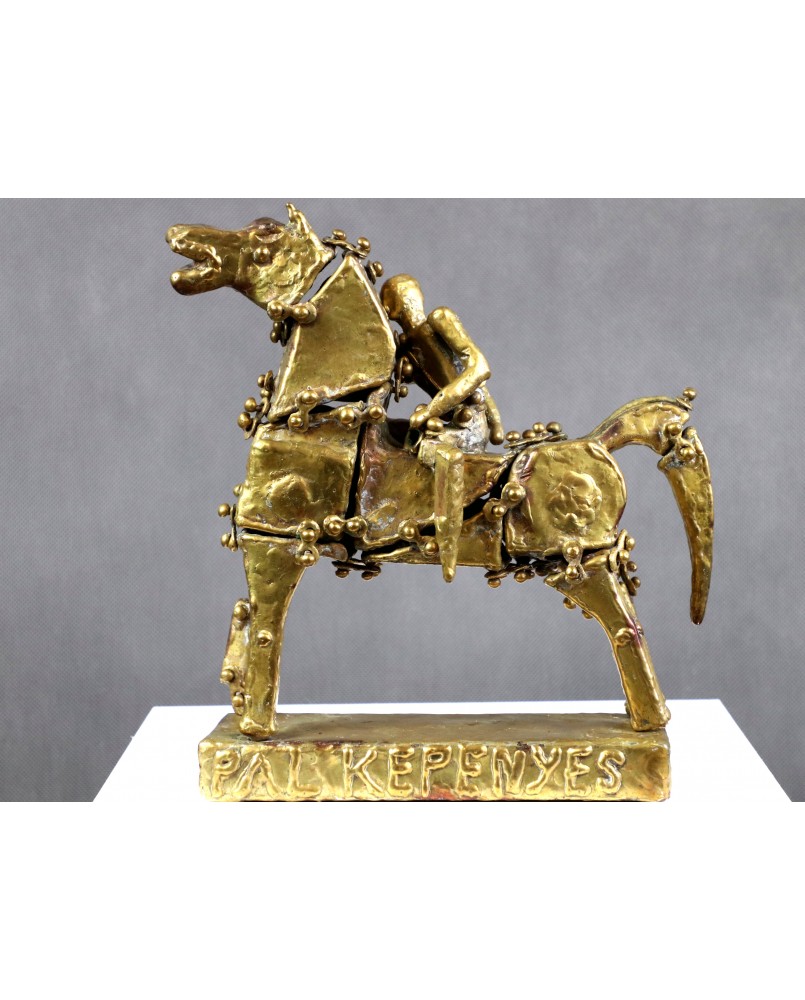
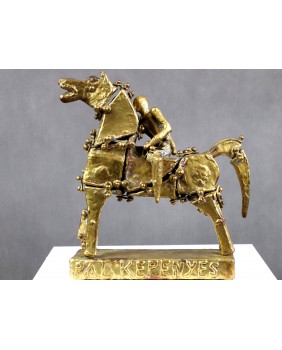
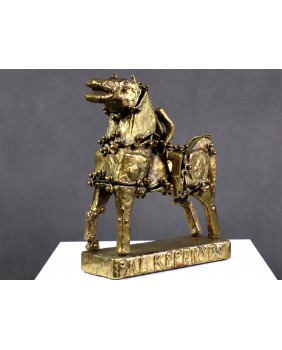
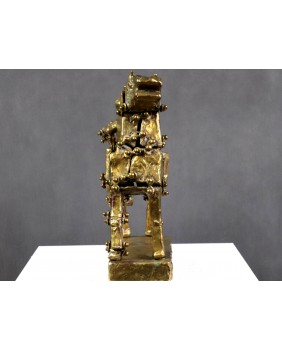
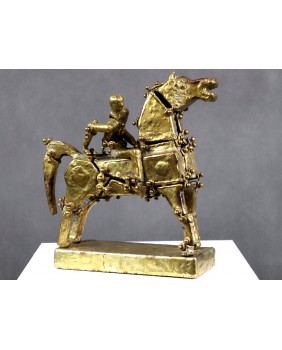
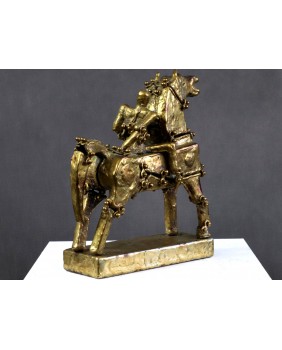
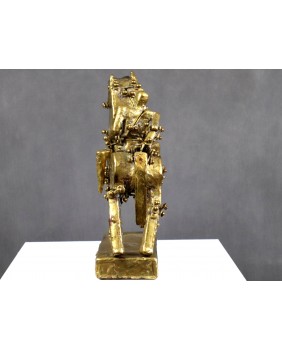
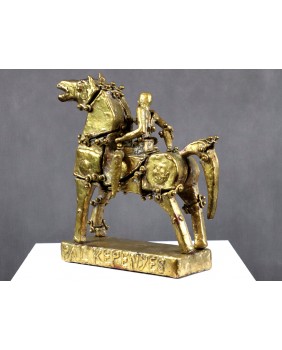
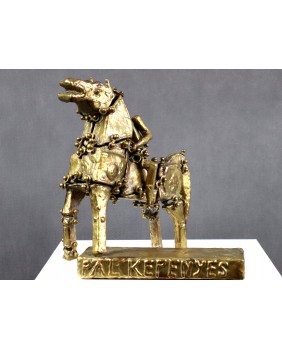
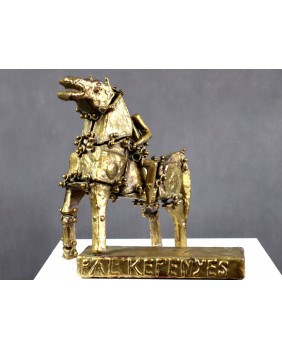
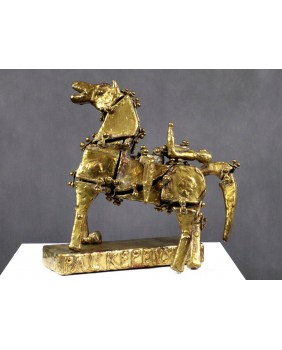
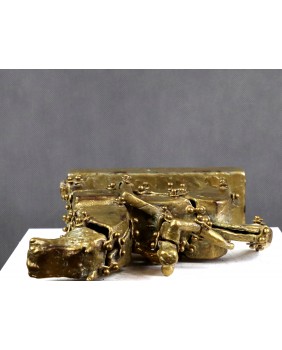
The horse rider offered here is a sculpture of the kind for which the most important thing is the form that allows it to interact with the viewer. The viewer has the right to shape it freely and even dismantle it quite easily. It is 25 cm high and 23 cm long. The horse is 7 cm at the withers and stands on a base measuring 20 by 8 by 3 cm.
His dream is to create a futuristic sculpture displayed using laser light in outer space so that anyone traveling beyond our planet can admire it.