


The Tikar people believed that a child was created from a woman's menstrual blood.
I will not even attempt to describe all the ethnic groups inhabiting what is now Cameroon. There are over 20 large groups, which are often divided into numerous subgroups, and even these do not always speak the same language.
Suffice it to say that the Tikar people [divided into smaller ethnic communities, of course] live in the northwestern part of Cameroon, near the border with Nigeria. Members of this community are proud of their history and tribal affiliation. They emphasize the bravery of their ancestors and the role of the Tikar in the construction of African states. An interesting fact is that many contemporary African Americans have undergone genetic testing to prove their affiliation with the Tikar people. Condoleezza Rice is one example.
For me, it is important that the Tikar people were famous for their tribal art. They were masters of bronze casting, in which they were on a par with the inhabitants of the Kingdom of Benin. Their beautiful, large bronze thrones are well known. A common decorative motif on these seats was motherhood. The Tikar believed that a child was created from a woman's menstrual blood. During pregnancy, this blood forms the body and most of the child's organs. Only the bones, brain, heart, and teeth are formed from male semen.
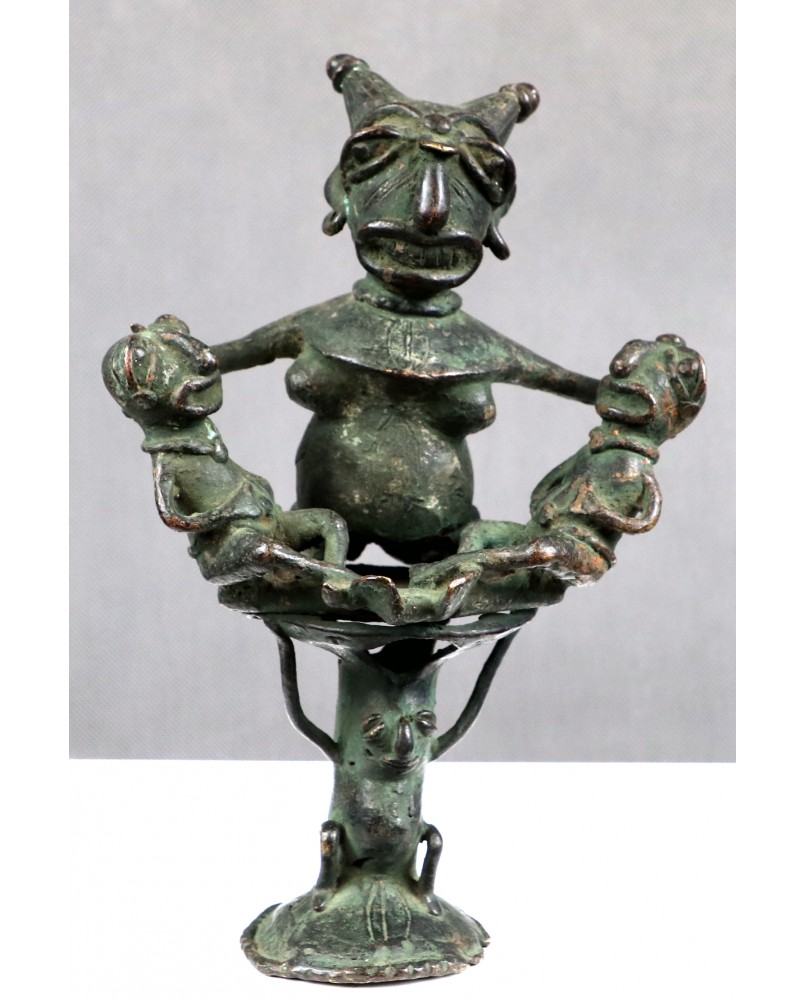
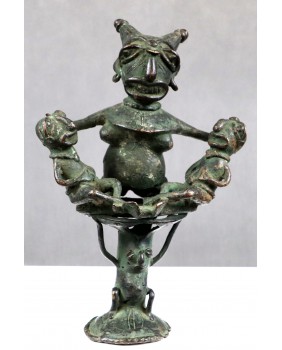
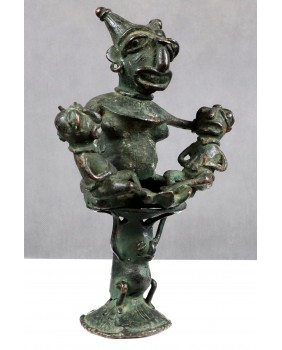
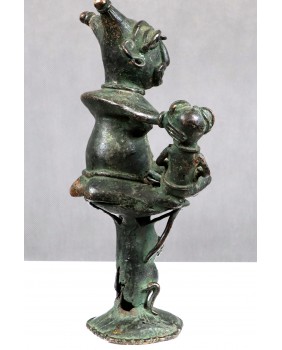
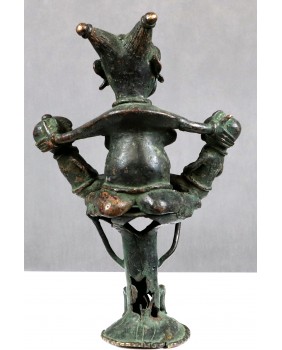
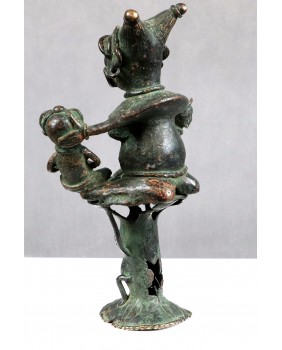
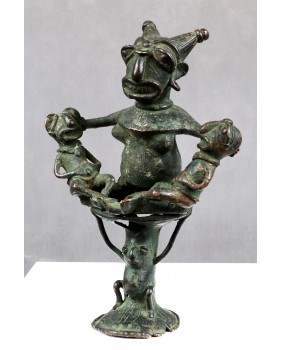
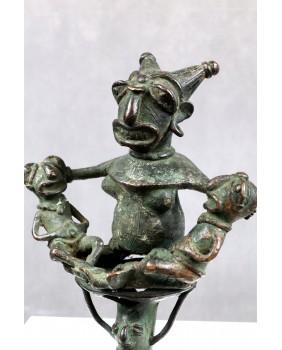
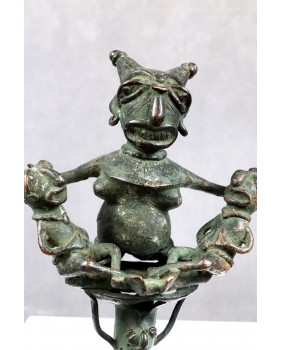
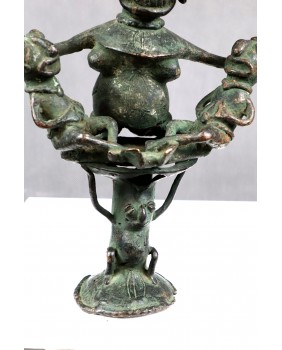
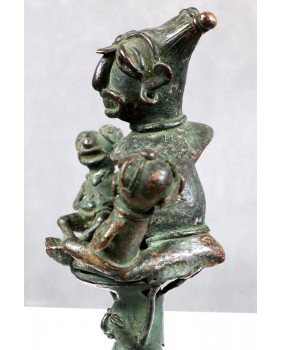
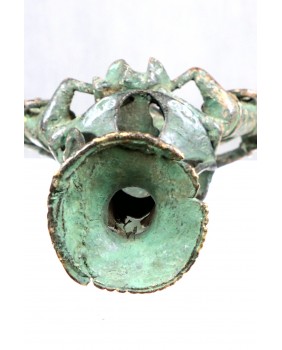
The figurine offered in the store refers to the thrones cast in Cameroon. It is almost a smaller copy of them. It depicts a woman in traditional dress, jewelry, and hairstyle preparing to feed two children. A real gem of Tikar casting art. The beautiful, durable green patina suggests that the object was created in the first half of the 20th century at the latest.
The sculpture is 25 cm high and 17 cm wide. The diameter of the base is 8 cm.
The Tikar people believed that a child was created from a woman's menstrual blood.