


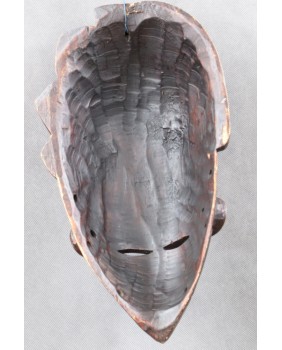
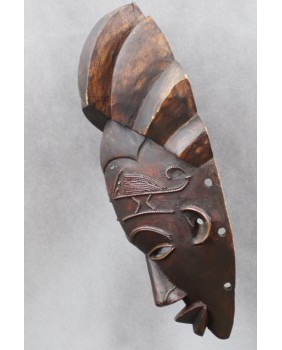
The choice was determined by the hair. It is the distinguishing feature of Gela masks. According to the canon, it should be elaborate and impressive. I must admit, however, that after looking through several hundred photos of such geometric and asymmetrical hairstyles, I did not find any.
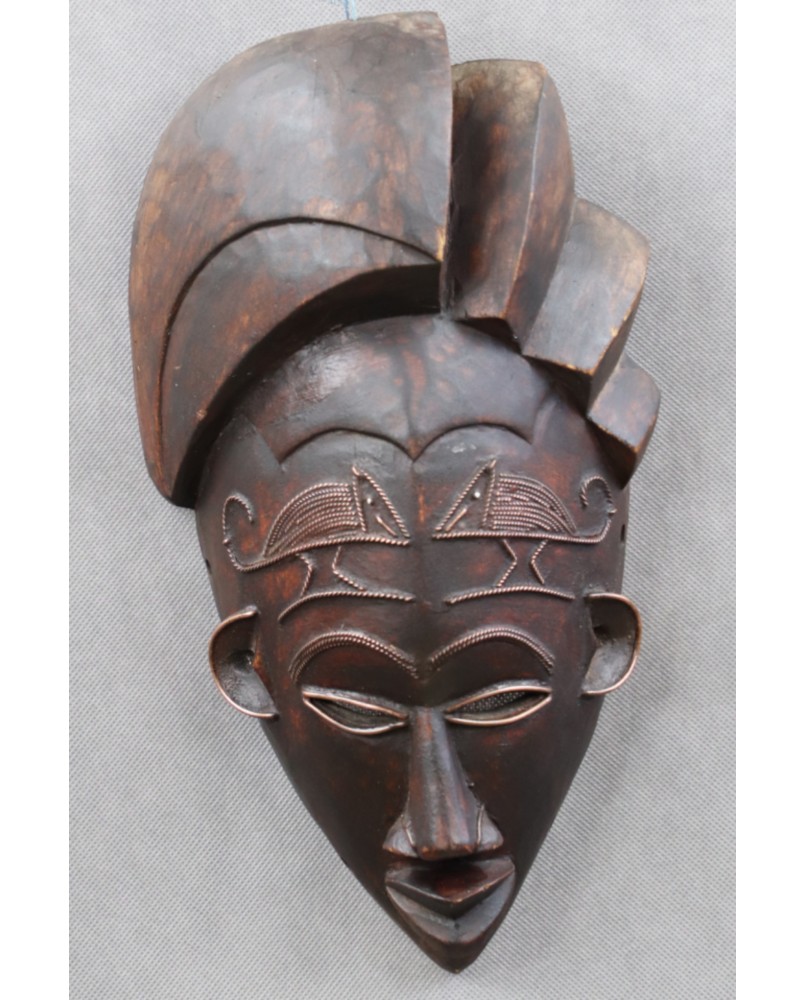
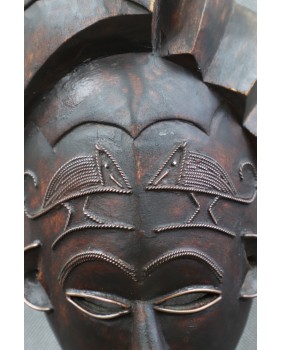
Please treat this description of the mask as an author's interpretation rather than a professional description by an expert in African art. I hesitated for a long time over which community to attribute the mask decorated with images of chameleons to. I considered the Punu, the Baule, and the Dan. Ultimately, the small Bass tribe, whose culture was strongly influenced by the Dan, won out. All the possibilities I considered were linked by their geographical proximity. The choice was ultimately determined by the hair. This is a distinctive feature of Gela masks. According to the canon, it should be elaborate and impressive. I must admit, however, that after looking through several hundred photos of such geometric and asymmetrical hairstyles, I did not find any.
Gela masks are the embodiment of feminine beauty. They were used in ceremonies marking the end of the initiation rites for boys, their transformation into men, hence perhaps the images of chameleons symbolizing transformation. Gela masks usually covered incisions that were the equivalent of tribal tattoos.
Dan masks There was a strict hierarchy of importance. They represented spirits living in the bush who wanted to participate in village life.
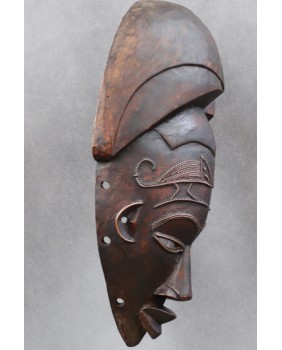
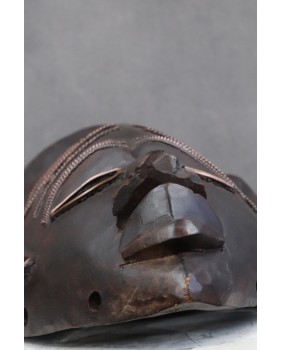
I think the mask was created at the end of the 20th century and the artist who created it had his own individual view of Dan art. It is 35 cm high, 20 cm wide, and 11 cm deep. It is made of fairly hard wood and precisely decorated with copper wire.
The choice was determined by the hair. It is the distinguishing feature of Gela masks. According to the canon, it should be elaborate and impressive. I must admit, however, that after looking through several hundred photos of such geometric and asymmetrical hairstyles, I did not find any.