


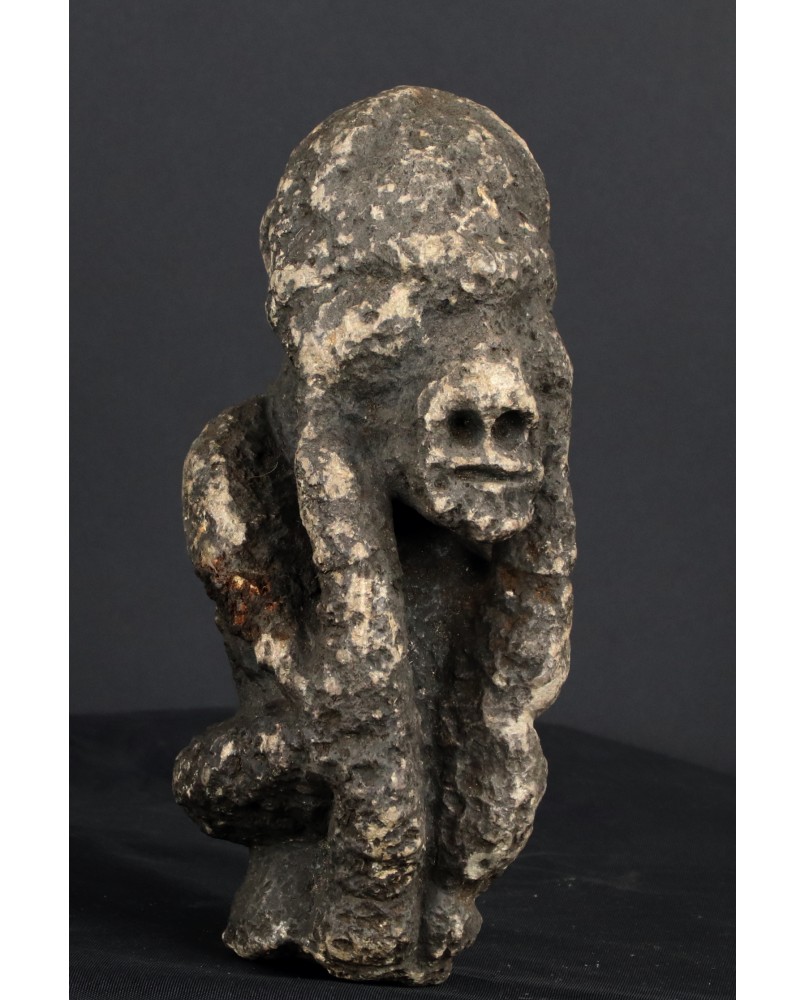
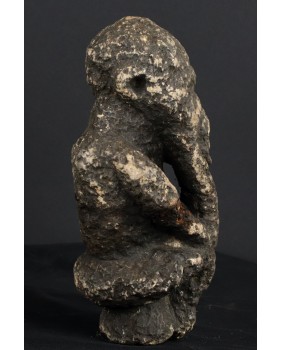
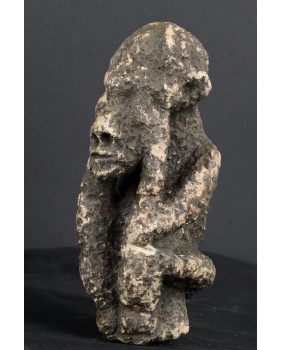
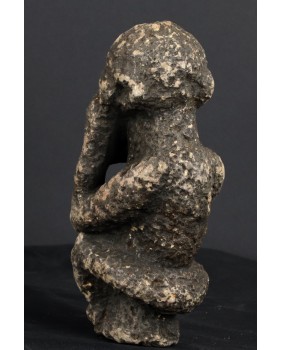
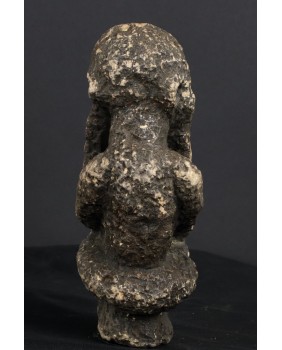
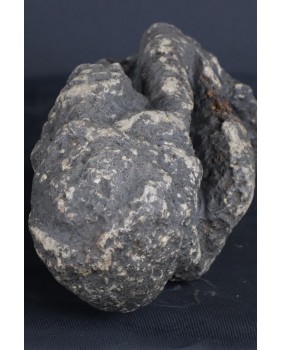
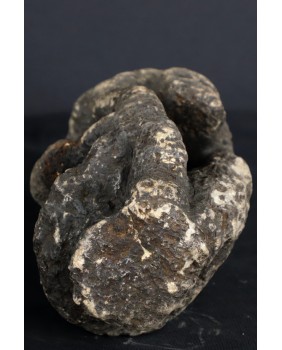
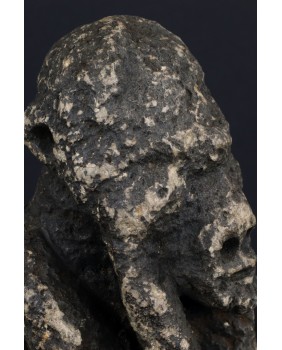
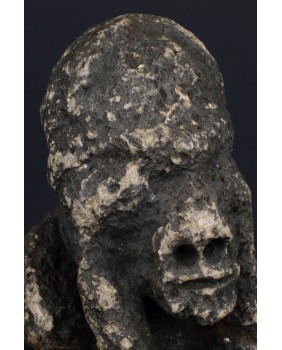
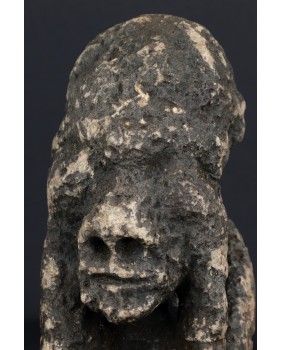
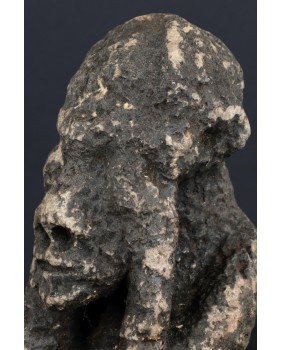
The sculpture of Mizaru, which is the name of the monkey covering its eyes, is made of stone, probably a type of quartzite. It is heavy, and its grainy structure is clearly visible.
The three monkeys – one of the most widespread sculptures in Asian mass culture. So widespread that its original message has been almost completely lost, leaving only the cursory "see no evil, hear no evil, speak no evil." Meanwhile, the creator's intention was to illustrate the Confucian recipe for a good life. And that did not mean that we should not see evil in the world around us. It only said that evil is an exception, an unacceptable situation. But for our mental health, we should not get overly excited about it. Because living in a circle of evil has a destructive effect on our mind and causes undesirable behavior. Confucius' ideas have also been widely adapted in Buddhism and even supplemented. Buddhism added a fourth monkey that does no evil.
This message has become particularly relevant in the modern world, where the rule is that the only news worth reporting is bad news. Just look at the number of views on the internet for posts about evil and violence.
The sculpture of Mizaru, as the monkey covering its eyes is called, is made of stone, probably a type of quartzite. It is heavy and has a clearly visible grainy structure. It could have been created anywhere in Asia, from China to India. I would bet on Indonesia, but only because monkeys have a special status there due to the hero god Haman. It is old, and I doubt it was created for commercial purposes.
It is 21 cm high, 8 cm wide, and 11 cm deep. It is a bit unstable, and it is difficult to find a position in which it remains upright. The passage of time has probably worn down the edges of the sculpture.
The sculpture of Mizaru, which is the name of the monkey covering its eyes, is made of stone, probably a type of quartzite. It is heavy, and its grainy structure is clearly visible.