


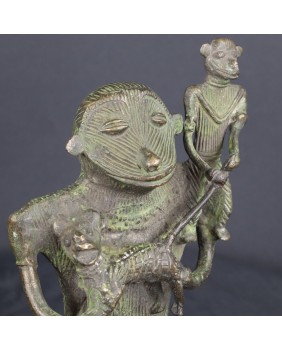
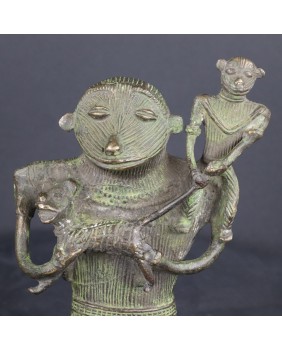
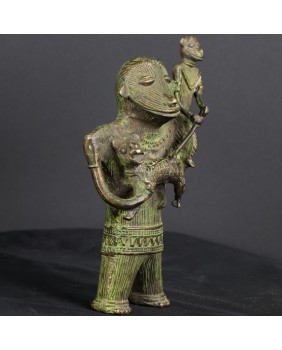
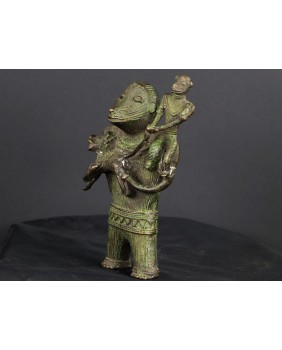
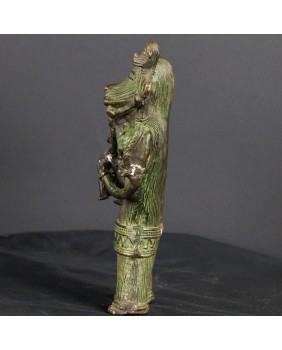
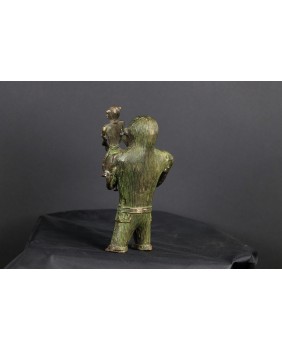
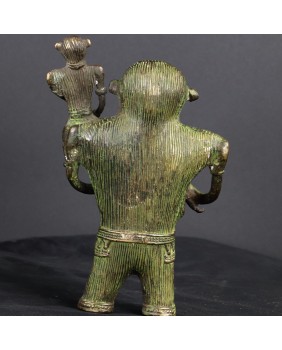
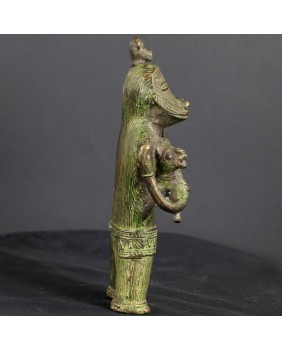
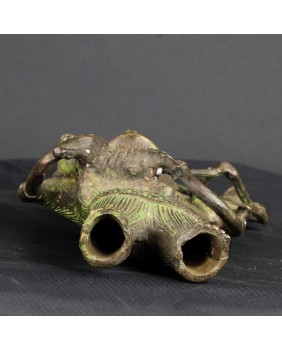
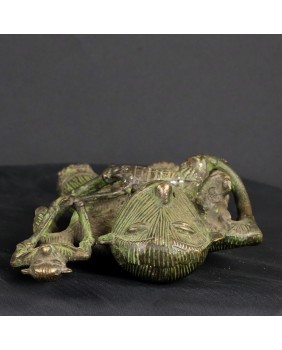
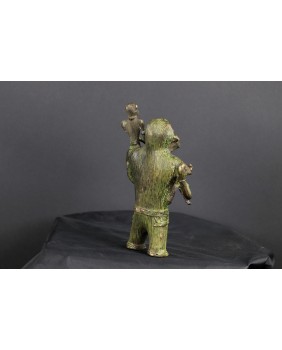
He is worshipped in various forms throughout Asia, and his character is embodied in folk culture and even in contemporary pop culture. This depiction of Hanuman, which differs somewhat from traditional iconography, probably originates from folk beliefs.
I would most likely sign it "mean monkey." Of course, I'm joking, but no other description has ever taken up so much of my time and effort. Hundreds of pages and photos reviewed. And I didn't do it alone. I asked several people who collect African art for help, because that's where I first looked for the provenance of the sculpture, based on information from a French seller. I received various answers. People pointed to the Tikar, Igala, and Ashanti tribes. Personally, I was also inclined to search among the tribes living around the Gulf of Guinea.
With African art, if you successfully identify an object, you can usually find one that is the same or very similar. This art is repetitive, drawing on a common pattern. Unfortunately, none of my searches yielded any results. I couldn't find anything similar. Finally, I posted a request for identification on an English-language Facebook group specializing in African tribal art. And here's the surprise: I was sent to northeastern India. To the province of Bastar. I have already written about the art of lost wax casting when exhibiting an owl from Dohra in India. Primitive cultures use the same means to achieve their artistic goals, regardless of the continent on which they originated. It is easy to get confused. I recognized the authority of the group and attributed the sculpture as suggested.
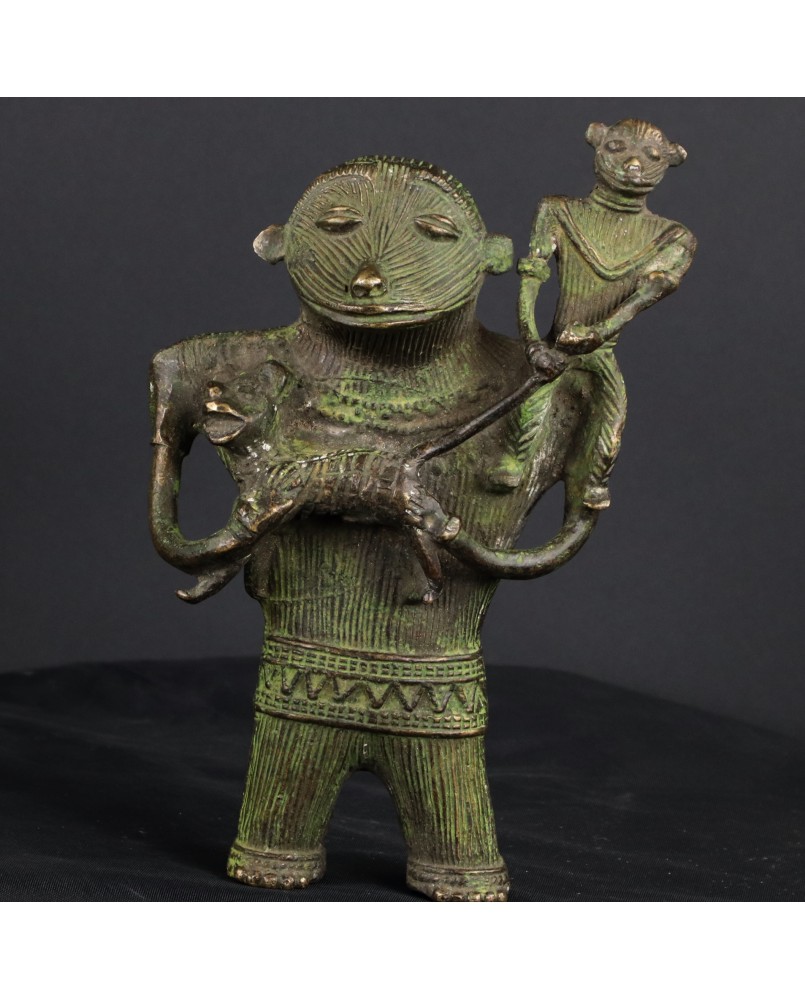
Why Hanuman? Because I have encountered a similar representation of this god. In a similar costume and pose. Unfortunately, I was unable to find Hanuman anywhere in a configuration with a monkey and a wild cat. I console myself with the fact that the extraordinary and multi-layered stories about his achievements are deeply rooted in the plebeian culture of India, so perhaps there is such a theme there. These stories are somewhat reminiscent of the contemporary Western myth of Superman. At least that's how I see them, perhaps because martial arts practitioners sometimes refer to Hanuman.
I will not describe the vicissitudes of Hanuman, which led him to end up in human form with the head of a monkey. It's a long story. Suffice it to say that he was a faithful, blindly devoted servant of Rama, who in the war with the demon Ravana recovered the abducted Sita, Rama's wife. He is one of the main characters of the Ramayana epic. Endowed with extraordinary power, he was able to move entire mountains, change his form, and perform heroic and always righteous deeds.
He is worshipped in various forms throughout Asia, and his character is embodied in folk culture and even in contemporary pop culture. And it is probably from folk beliefs that this representation of Hanuman, somewhat different from traditional iconography, originates. At least, I hope so. But I would be happy to learn about other interpretations of the sculpture on display.
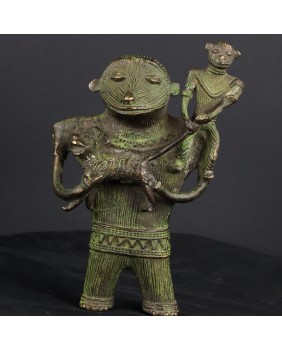
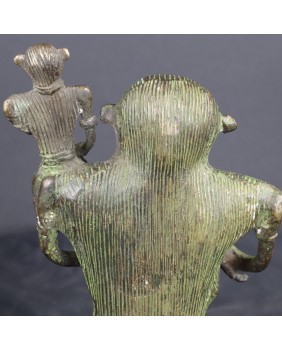
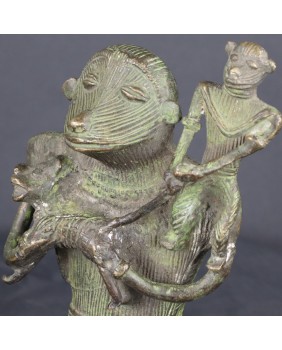
The sculpture is not large. It is 21 cm high, 16 cm wide, and 6 cm deep. It has a nice, durable patina.
He is worshipped in various forms throughout Asia, and his character is embodied in folk culture and even in contemporary pop culture. This depiction of Hanuman, which differs somewhat from traditional iconography, probably originates from folk beliefs.