


The cult of Jieri obliges members of the Fang tribe to consult the oracle before every major event in the life of the community, such as sowing, hunting, changing residence, battle, war, etc. During this ceremony, preceded by prayer and feasting, the skull of an ancestor is rubbed with a special powdered substance, sometimes paint is used.
Fang art is better known for its characteristic elongated triangular masks. The figures appear much less frequently, but it was the figural sculptures that fascinated Vlaminck, Derain, and Epstein. It was through Fang sculptures that they discovered tribal Black Africa, trying to find its formal logic in addition to its emotions. They infected Picasso, Matisse, Modigliani, and many, many other artists with it.
Fang figures are mostly associated with the bieri ritual. It concerns the cult of ancestors and their relics. The skulls and bones of the deceased, dignified members of the tribe, are placed in cylindrical containers made of bark, which are a kind of reliquary. A wooden figure was placed on top of the container to guard the bones of the ancestors. The sculpture itself, without the remains, lost its magical power and could be discarded or sold.
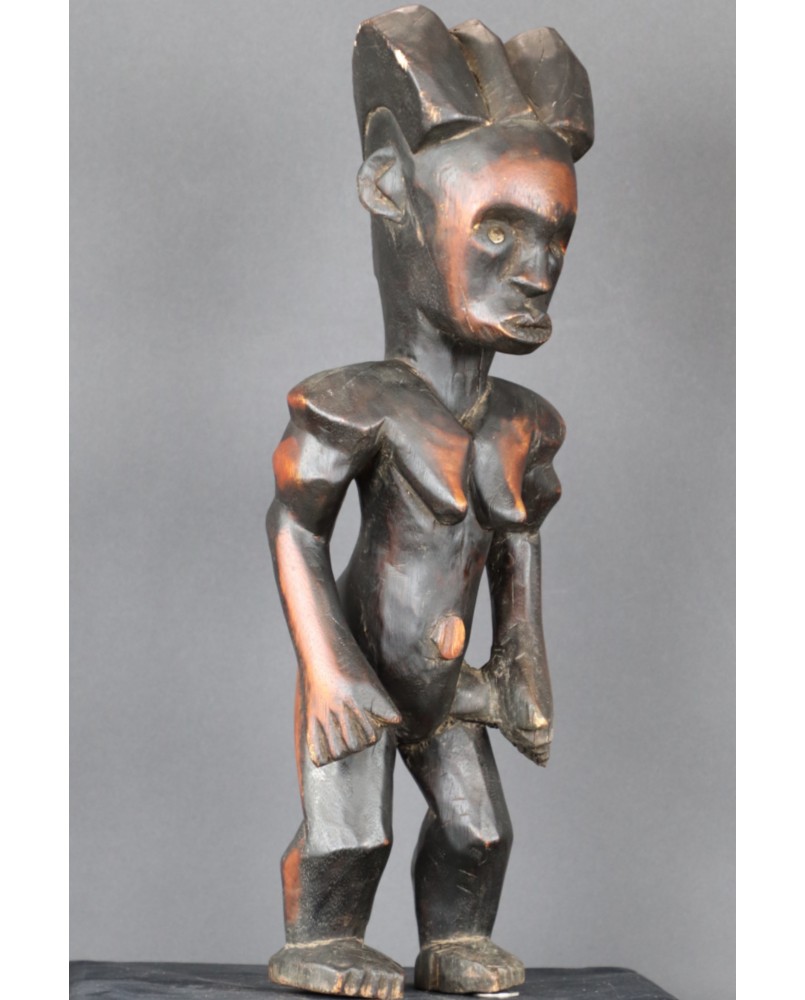
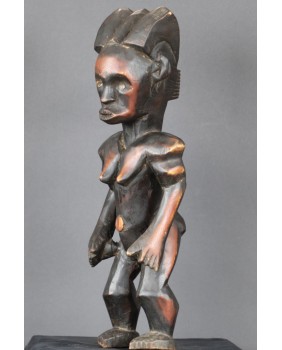
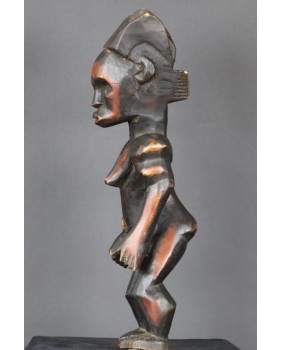
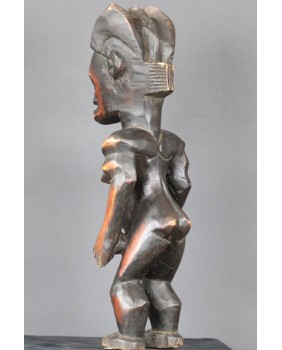
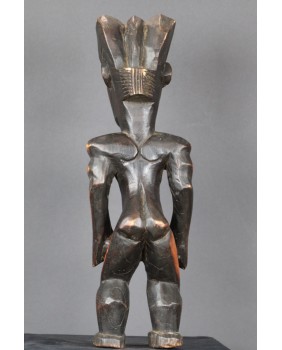
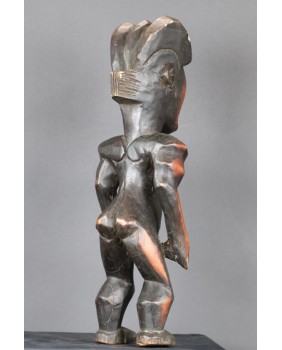
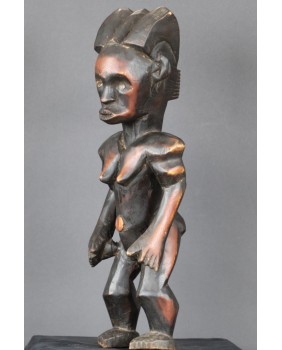
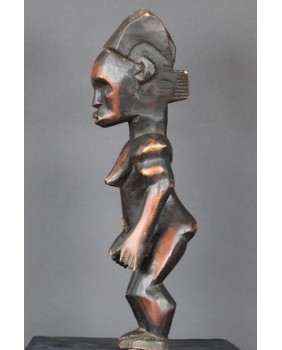
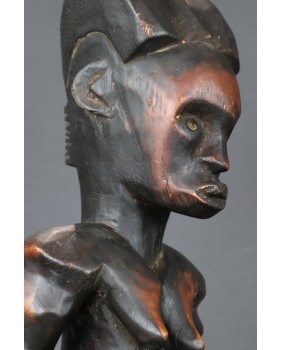
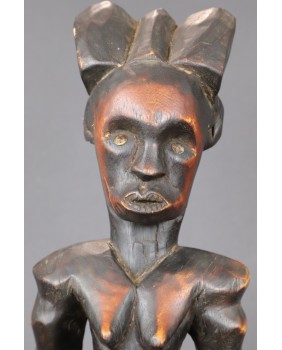
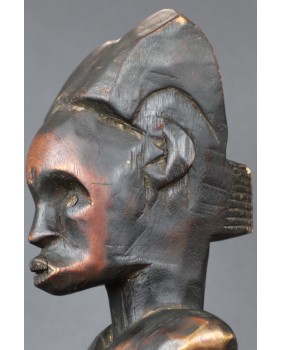
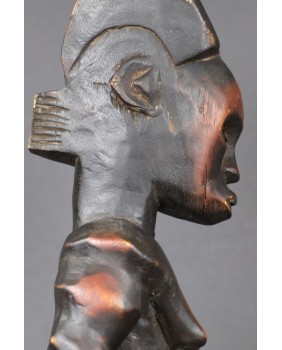
The guardians of the relics are usually sculptures of women. Fang are quite easy to recognize by their stocky, bulbous, lumpy silhouette. Fang figures stand or sit, their proportions resembling those of a newborn baby, and, according to researchers, they also assume an embryonic position. This is supposed to be a link between the three categories of people distinguished by this community: the unborn, the living, and the dead. The adulthood of the sculptures is determined by their hairstyles and, in the case of women, their ample breasts. The hairstyles refer to the popularity of wigs worn in the past by both women and men. The fact that the guardians of the relics are female figures is explained by their strength resulting from their ability to procreate.
The cult of Jieri obliges members of the Fang tribe to ask for a divination before every major event in the life of the community, such as sowing, hunting, changing their place of residence, battle, war, etc. During this ceremony, preceded by prayer and feasting, the skull of an ancestor is rubbed with a special powdered substance, sometimes paint is used.
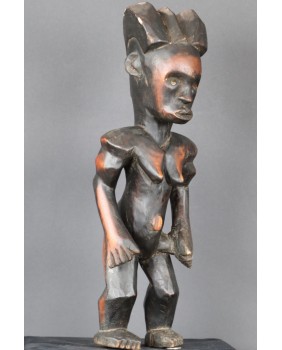
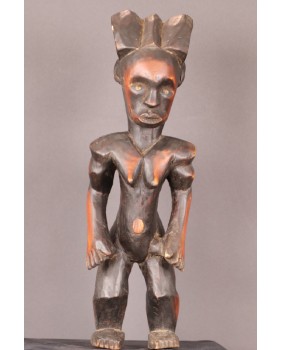
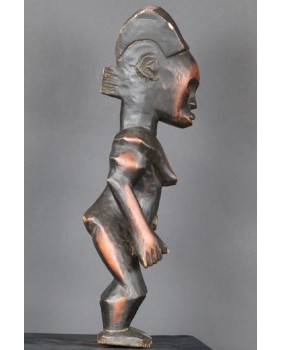
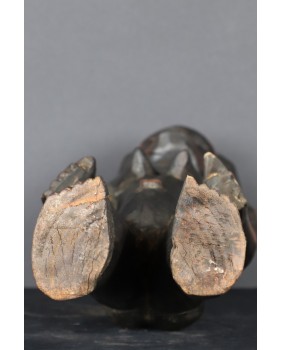
The figure I am offering, I believe, was made in the second half of the 20th century. It accurately reflects the canon of Fang tribal sculpture. Perhaps the only slight difference is that it is colored in two colors. In the past, a similar shine effect was achieved by rubbing selected parts with oil. I bought the sculpture in France along with a larger collection of African art. It is 48 cm high, 15 cm wide, and 13 cm deep. It is not very stable, so I placed a coin under its foot for the photos.
The cult of Jieri obliges members of the Fang tribe to consult the oracle before every major event in the life of the community, such as sowing, hunting, changing residence, battle, war, etc. During this ceremony, preceded by prayer and feasting, the skull of an ancestor is rubbed with a special powdered substance, sometimes paint is used.