


Boccio figures gain power and become effective only when they are charged with magical energy by a voodoo priest. In practice, this means painting the figure with a substance made according to a special recipe, which sometimes includes the blood of sacrificed animals.
Many myths and legends have grown up around voodoo. Most of them are untrue. The center of voodoo worship in West Africa is Benin, formerly Dahomey. This religion is mainly spread among the very numerous Fon people. I will not attempt to summarize the voodoo religious system, as it contains over 260 gods and spirits. Suffice it to say that many of these deities are represented in the form of wooden figures called boccio. These are usually primitive sculptures in the form of a human silhouette, without individual features, scarification, or hairstyles. Boccio figures are often made by people who have nothing to do with the art of sculpture. Boccio are placed in village shrines, along roads, and on the outskirts of villages. They are usually dug into the ground, which, according to beliefs, is supposed to ensure union with the forces of nature.
Boccio gain power and become effective only when they are charged with magical energy by a voodoo priest. In practice, this means painting the figure with a substance made according to a special recipe, which sometimes includes the blood of sacrificed animals. Boccio are wrapped in ropes and rags, and often have containers, bags, metal wires, or screws attached to them. The imagination of voodoo priests in this matter is enormous.
Boccio are usually dedicated to a specific task. They can influence the weather, detect a thief, or protect a specific person. They are equipped with mechanisms to ward off all evil forces. Sacrifices are made around boccio figures.
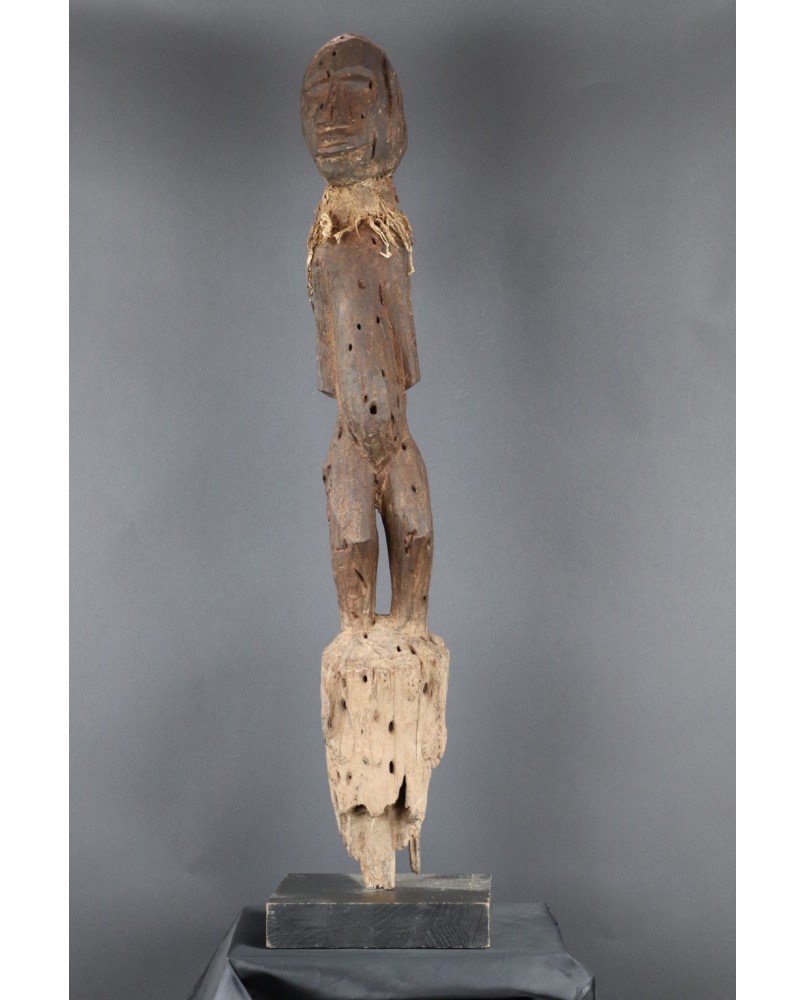
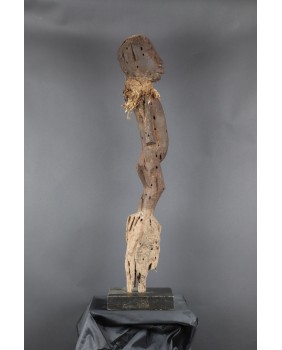
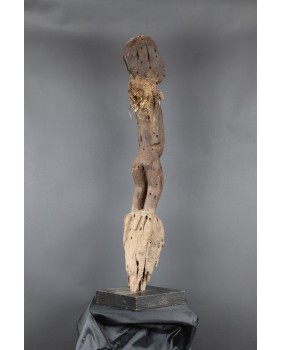
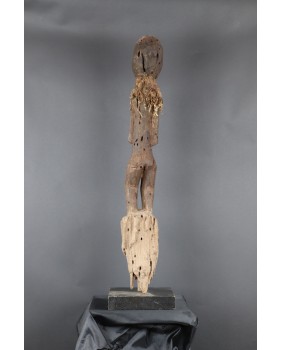
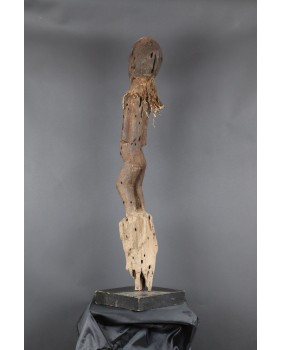
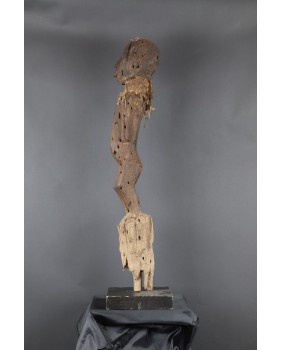
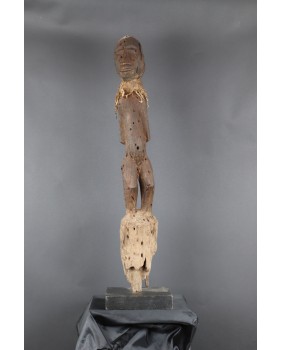
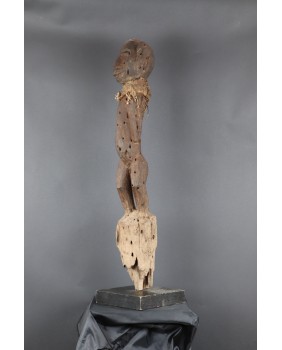
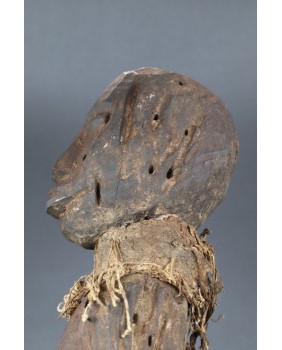
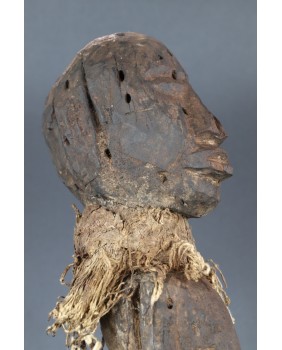
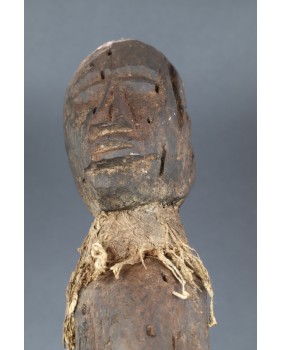
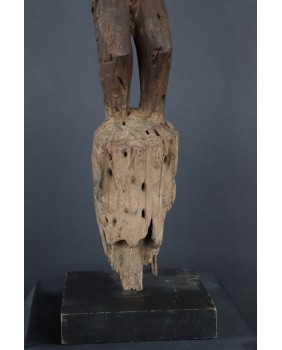
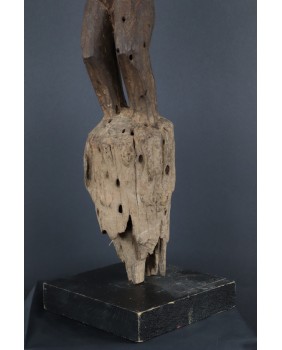
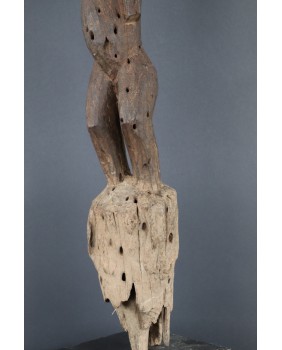
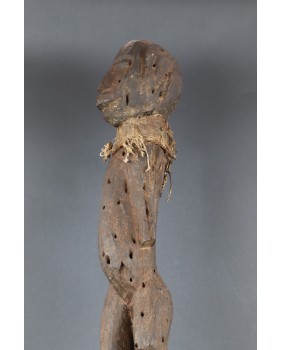
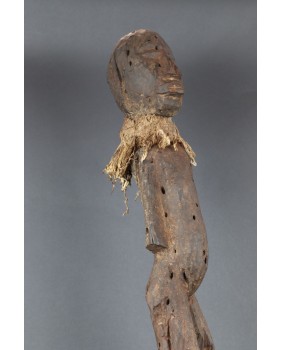
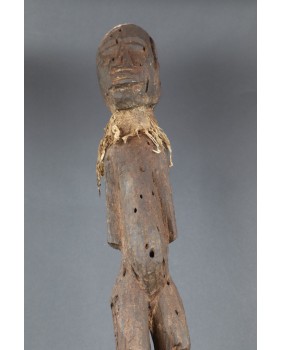
The sculpture offered in the store is made of hard, fairly heavy wood. Its "magical power" is probably located under the cloth wrapped around its neck. It seems that, apart from the holes made by wood-eating insects, there are also some made by human hands. Perhaps these are places where additional magical material was hung. The bottom of the sculpture looks damaged by weather conditions. Perhaps the sculpture was dug into the ground. It is difficult for me to date it. It would be safe to place its creation in the second half of the 20th century. The sculpture was placed on a wooden base by its previous owner. Boccio is 77 cm high, 10 cm wide, and 9 cm deep. It stands on a base measuring 19 cm by 19 cm by 3.5 cm.
Boccio figures gain power and become effective only when they are charged with magical energy by a voodoo priest. In practice, this means painting the figure with a substance made according to a special recipe, which sometimes includes the blood of sacrificed animals.