


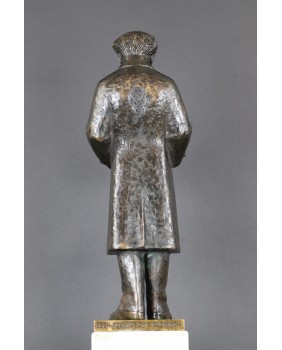
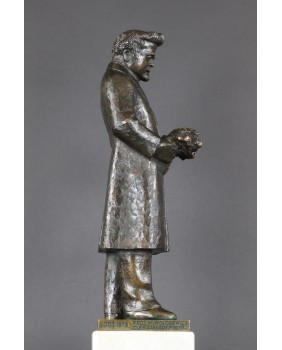
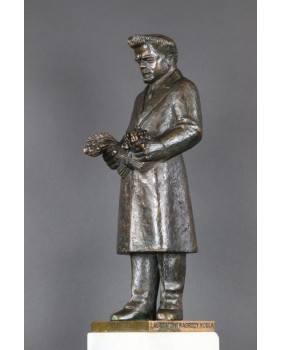
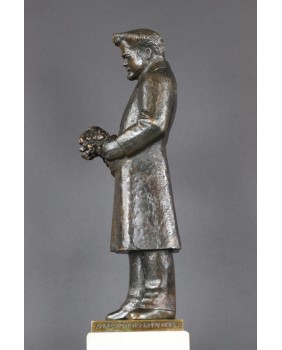
The sculpture is a testament to the political system under which many generations of Poles lived, and however we view it today, it is part of our history. It is a sought-after item among many collectors of art from that period.
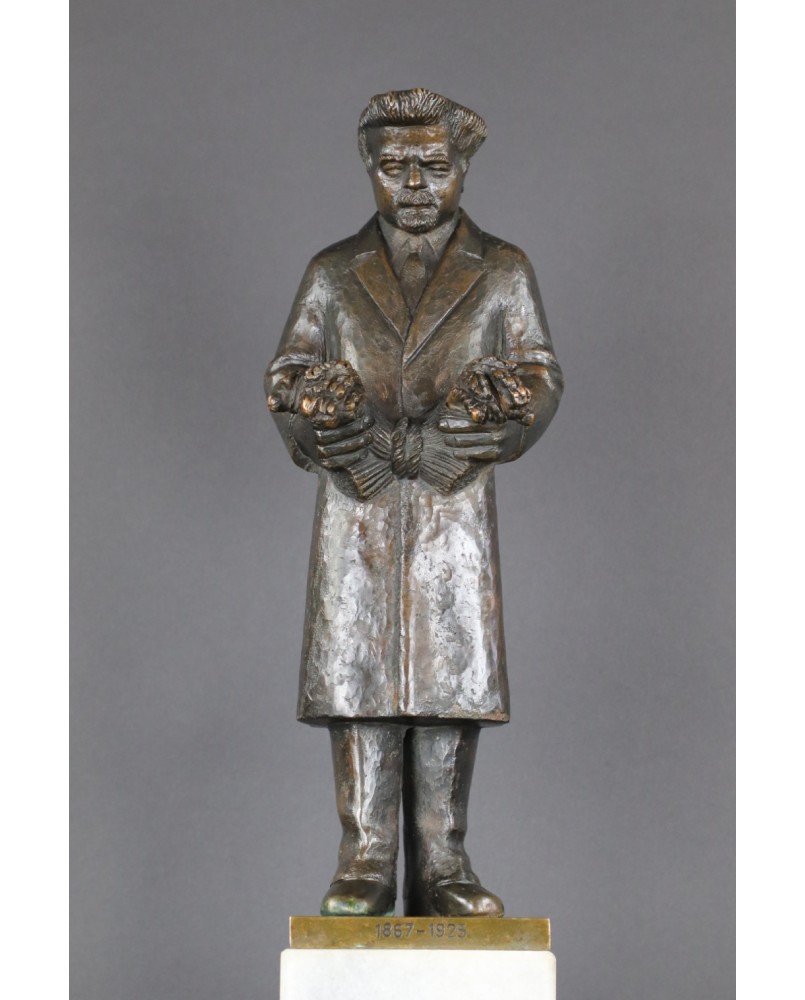
There are several reasons why I bought this sculpture. All of them are sentimental. It is a reduction of the monument to Władysław Reymont standing in Łódź, the city where I began my serious adventure with antiques in an antique shop I ran there for several years. The second reason is that I love Reymont, perhaps not for "The Peasants," for which the writer received the Nobel Prize in Literature, but for "The Promised Land." (Incidentally, the novel is set in Łódź).
The Reymont monument was erected in this city in 1978. Two anniversaries coincided at that time. It was the 50th anniversary of the writer being awarded the Nobel Prize in Literature and the 150th anniversary of the existence of the craftsmen's guild in this city. The craftsmen undertook to make the writer's monument. Children from Łódź schools undertook to collect colored scrap metal. That's how it was done at the time, in the twilight years of the Polish People's Republic.
The monument was designed by Wacław Wołosewicz, born in Vilnius, a permanent resident of Łódź, a sculptor and lecturer at the Higher School of Fine Arts. Good relations with the authorities allowed Wołosewicz to design and co-create several monuments in Łódź.
The most important person at the monument unveiling ceremony at that time was the first secretary of the Provincial Committee of the Polish United Workers' Party. Such a guest could not leave the event empty-handed. So, the foundry workers from Radogoszcz cast several smaller versions of the monument to be given as gifts to dignitaries.
I am now offering one of them for sale.
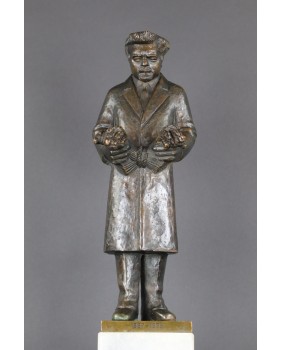
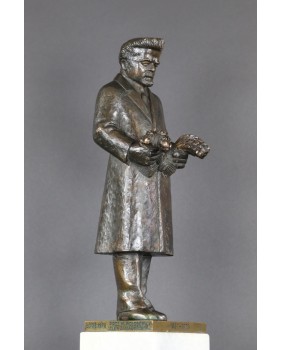
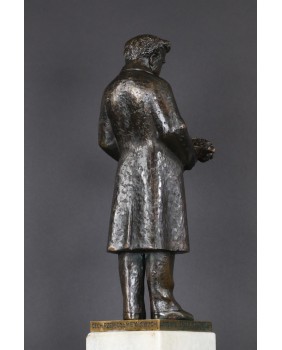
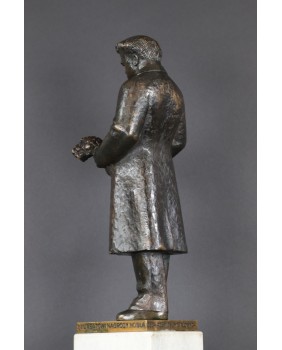
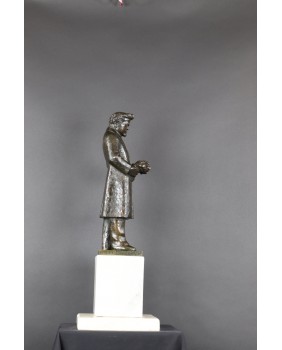
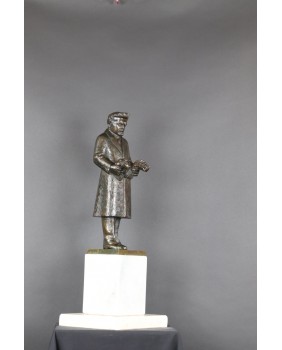
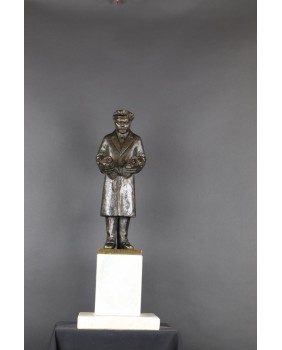
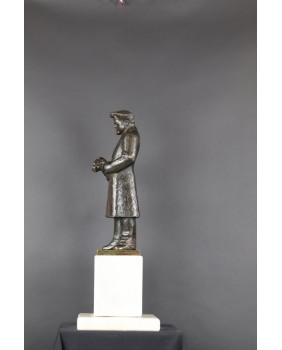
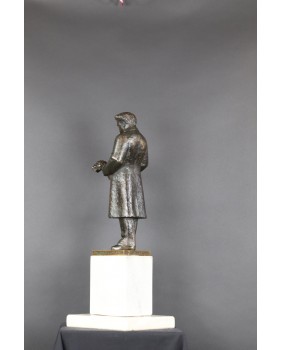
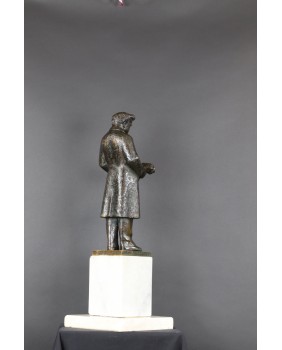
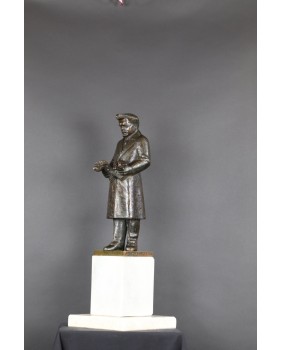
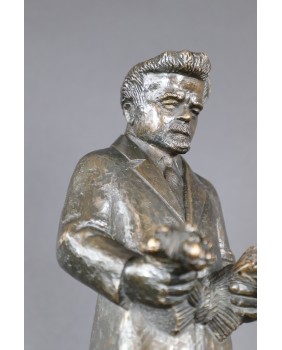
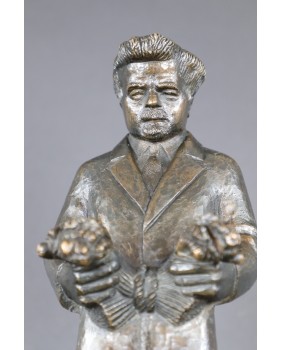
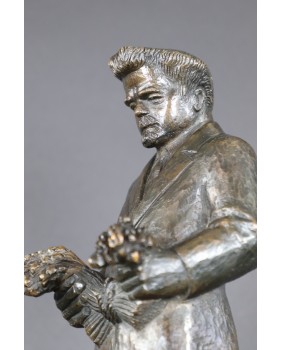
The sculpture realistically depicts the writer. The ears of grain held in his hands refer to the title of the Nobel Prize-winning novel and at the same time pay tribute to the farmers who, side by side with the working class, created the prosperity of the socialist homeland.
The sculpture is a testament to the system in which many generations of Poles lived and, however we view it today, it is part of our history. It is a souvenir sought after by many collectors of art from that period.
The sculpture is impressive. The bronze itself is 37 cm high and 55 cm high including the marble base. The width of the bronze figure is 14 cm, as is its depth. The base consists of two cubes. The first measures 12 by 12 by 15 cm. The lower one measures 20 by 20 by 3 cm.
The sculpture is a testament to the political system under which many generations of Poles lived, and however we view it today, it is part of our history. It is a sought-after item among many collectors of art from that period.