


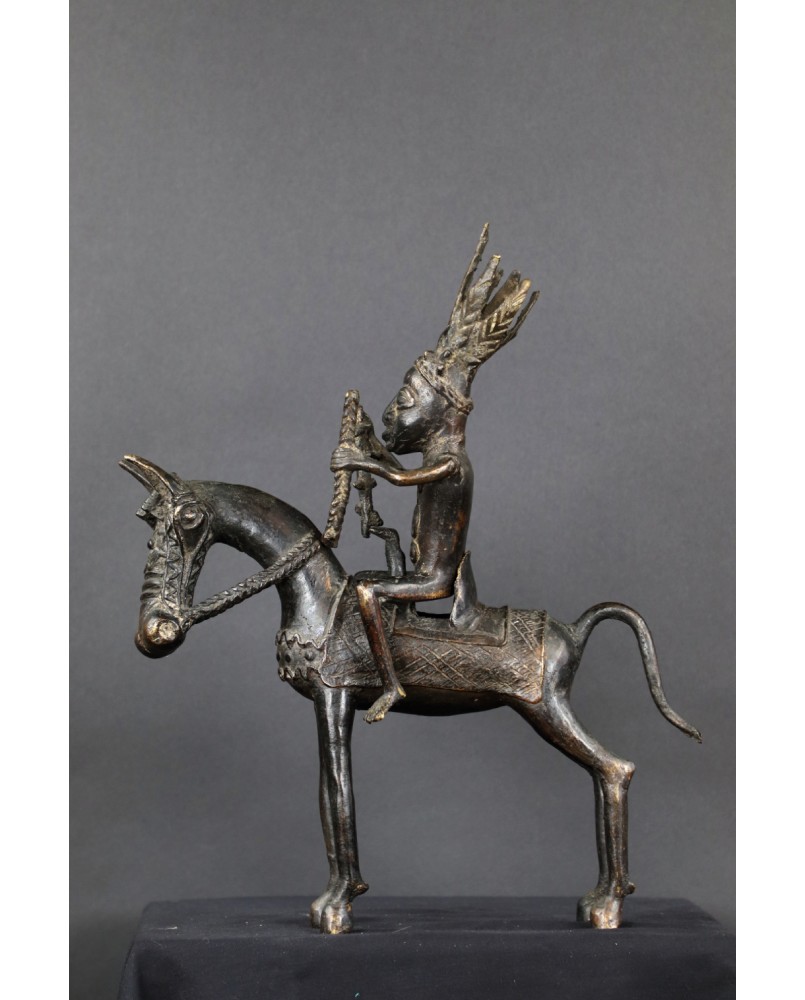
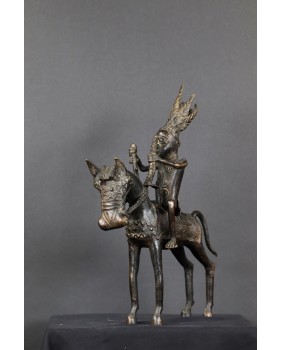
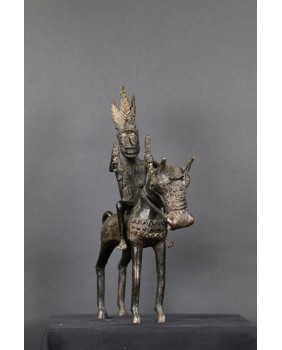
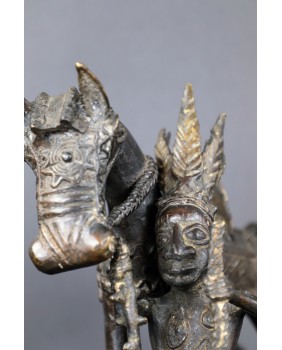
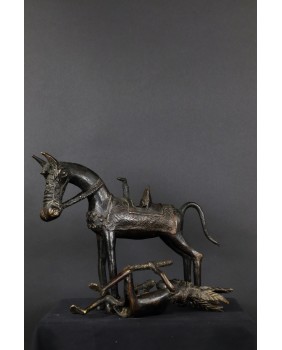
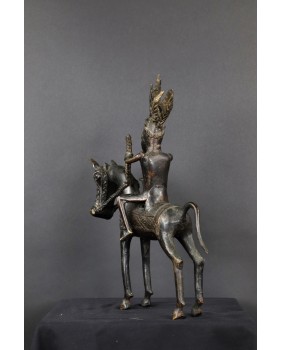
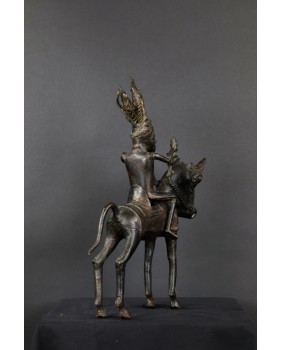
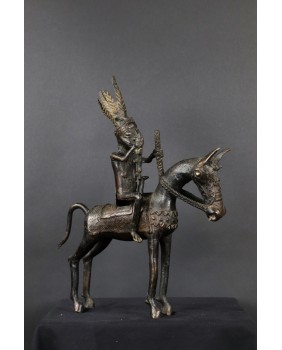
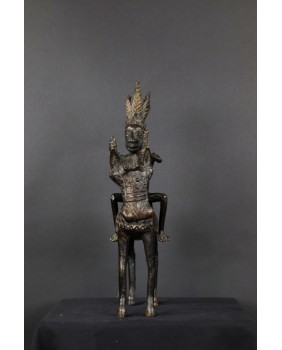
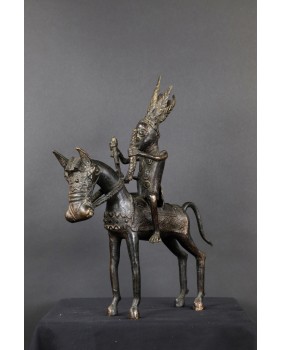
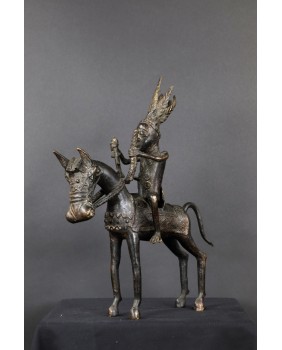
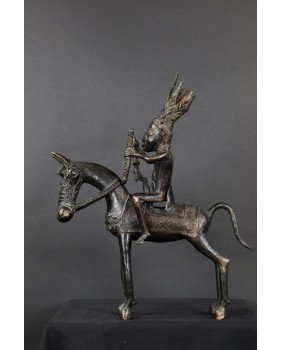
I wondered for a long time what the bronze actually represented. I couldn't quite reconcile the headdress with my perception of a completely different region of the world. It was only recently that I found information that headdresses made of red feathers from the West African gray parrot were made in Benin.
The history of the Kingdom of Benin is recorded in its bronzes. They constitute a kind of chronicle of history preserved in metal. Their primary function was to preserve the memory of events and people. The first order of a new king ascending the throne was usually bronze and ivory sculptures placed in a chapel dedicated to the memory of his father. In City Benin, the columns of the court of appeal were decorated with famous Benin reliefs depicting life in the kingdom. They depicted rulers, the king's relations with his subjects, visitors from Europe, neighboring kings, battles that were fought, priests, chiefs, warriors, and celebrations.
Benin's casters were masters of their craft. They cast using the lost wax method. They created very precise wax sculptures, which they then surrounded with fine sand and covered with equally fine clay, allowing them to create sculptures without the need for subsequent processing. They were able to make the base of a homogeneous sculpture from a different metal than the figure, mocking the laws of physics concerning different melting points.
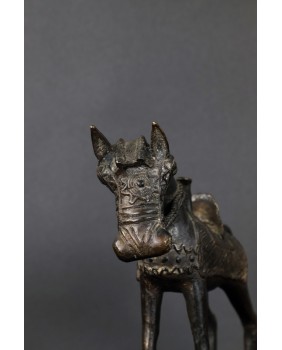
I wondered for a long time what the bronze sculpture actually represented. I couldn't quite reconcile the plume, which I had pigeonholed in my mind as belonging to a completely different region of the world. It was only recently that I found information that in Benin, plumes were made from the red feathers of the West African gray parrot. The red color symbolized war and vitality. The rider is dressed in a typical leather tunic that serves as armor. It is therefore clear that we are dealing with a warrior, and a significant one at that, because not everyone could afford a horse with a row and protectors.
The bronze is not very old. I believe it was made in the second half of the 20th century. The quality is inferior to that of the most beautiful Beninese bronzes, but it is acceptable. An unquestionable advantage of the sculpture is the fact that it avoids tourist clichés by referring to a rare prototype.
The rider is 30 cm high and 35 cm long. The width of the sculpture is 9 cm.
I wondered for a long time what the bronze actually represented. I couldn't quite reconcile the headdress with my perception of a completely different region of the world. It was only recently that I found information that headdresses made of red feathers from the West African gray parrot were made in Benin.