


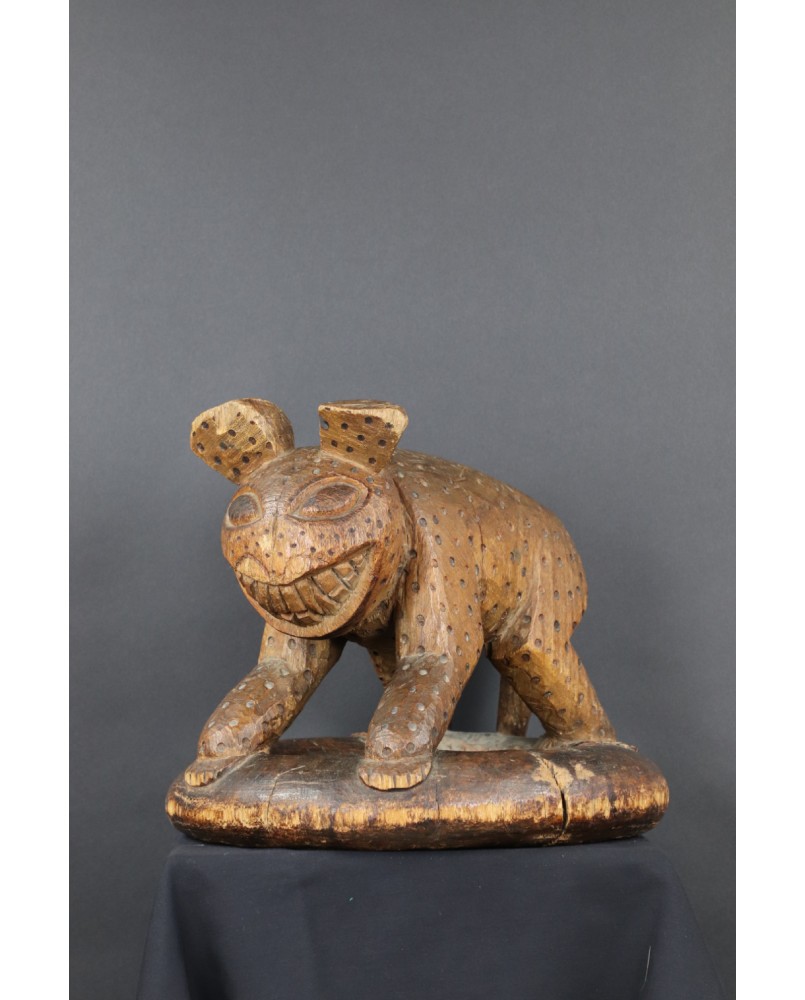
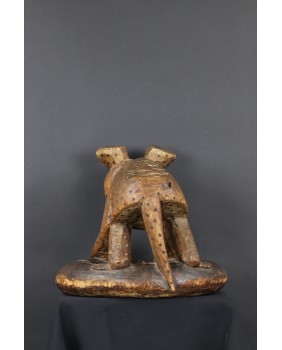
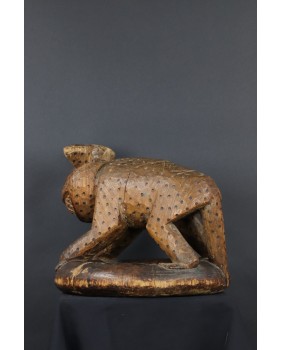
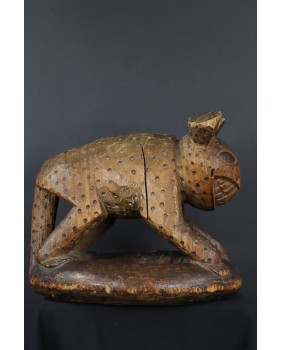
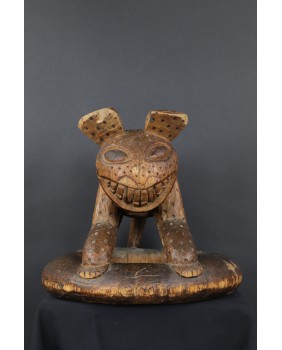
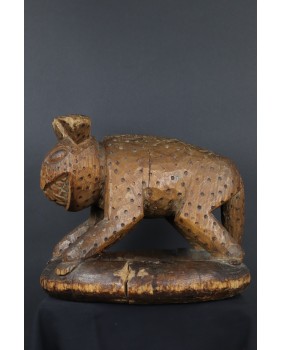
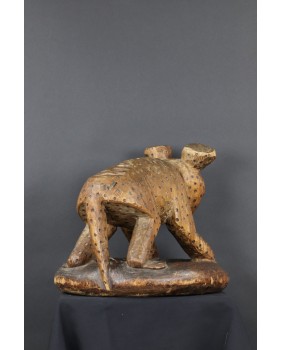
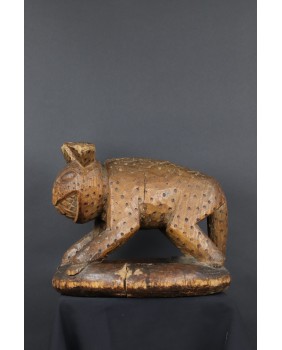
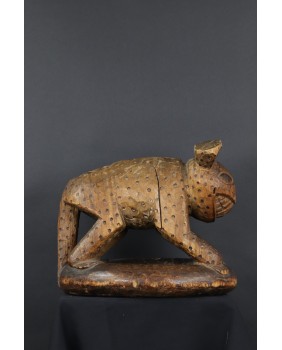
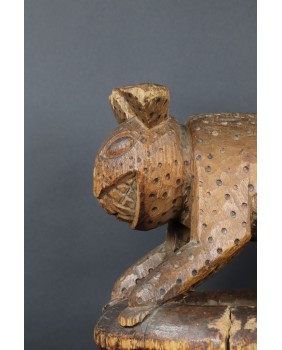
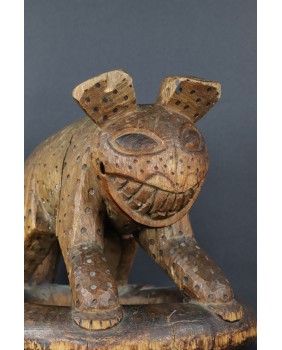
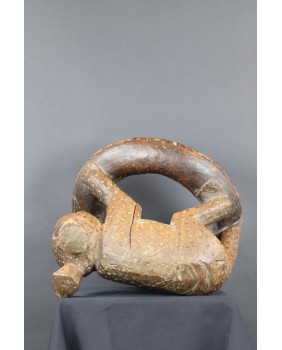
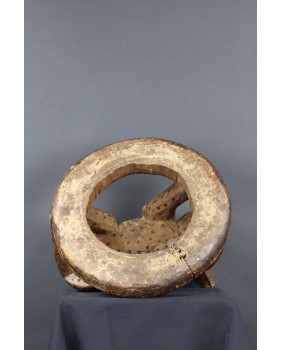
The leopard usually supported the seat of a stool or the bowl of a basin. In the case of this sculpture, it appears that it was created immediately as a representation of a leopard without any practical function. At least, there is no trace suggesting that it was ever otherwise.
I bought a hyena, I have a leopard. Such a wonderful transformation is only possible in African art, where, as we know, magic plays a special role.
But seriously. The seller offering the sculpture claimed it was a hyena. And I was ready to agree with him. Spots, round ears, a vile character, the proverbial hyena laugh. There were many indications of this. However, I was disturbed by the fact that, despite searching the vast resources of the internet for African tribal art, I could not find a similar sculpture. Struck by a premonition, I turned to a Facebook group of experts on the subject. The answer came almost immediately. It is a leopard from the Bamun tribe in Cameroon. A symbol of royal power. The embodiment of speed, aggression, and vitality. The answer was supported by a photo showing the same leopard surrounded by caryatids supporting the seat of a royal stool. Searching further on the internet, now with the correct keyword, I found several more similar leopards. However, they were always functional objects. The leopard usually supported the seat of a stool or the bowl of a dish. In the case of this sculpture, it seems that it was created immediately as a representation of a leopard without any functional purpose. At least, there is no trace suggesting that it was ever otherwise.
Either way, the sculpture is beautiful. And I think it is old. I would date it to the first half of the 20th century. The patinas are natural. Unfortunately, the sculpture has several cracks, including on the round base.
It is quite large. It is 30 cm high, 37 cm long, and 18 cm wide. The oval at the base is approximately 31 to 33 cm. I recommend it.
The leopard usually supported the seat of a stool or the bowl of a basin. In the case of this sculpture, it appears that it was created immediately as a representation of a leopard without any practical function. At least, there is no trace suggesting that it was ever otherwise.