


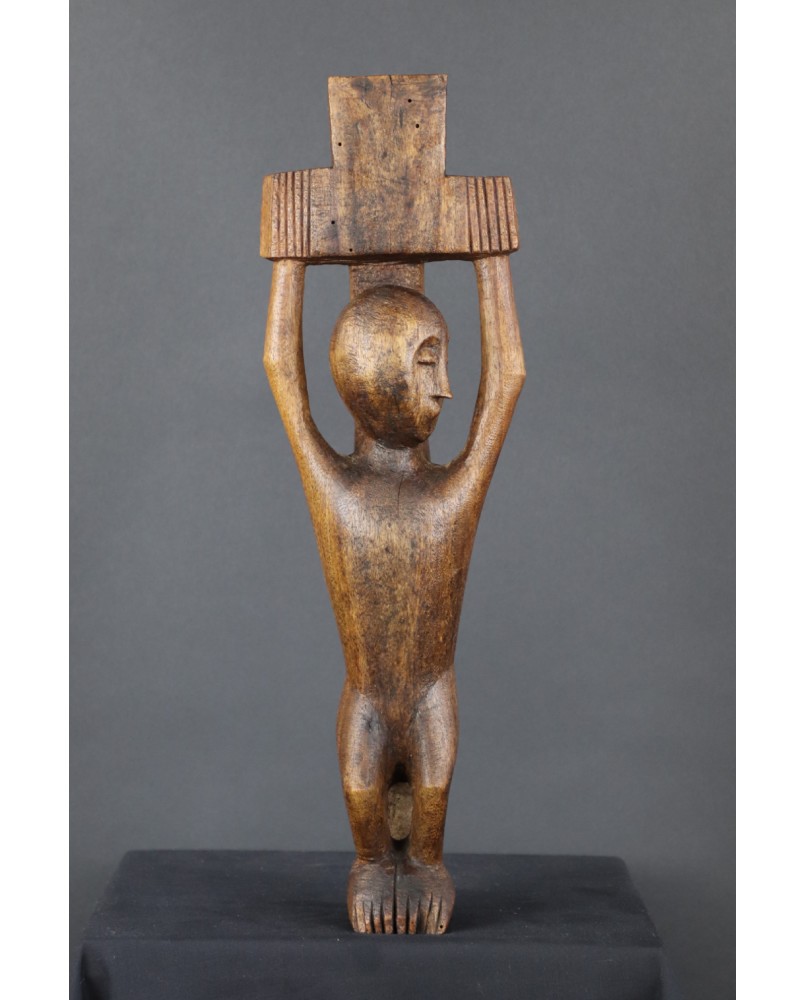
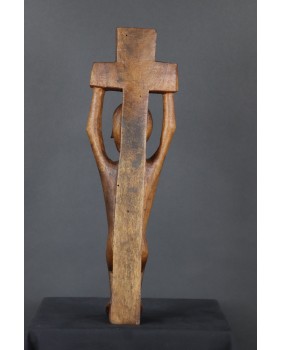
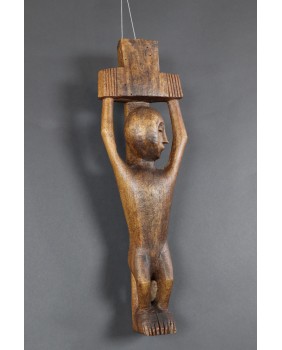
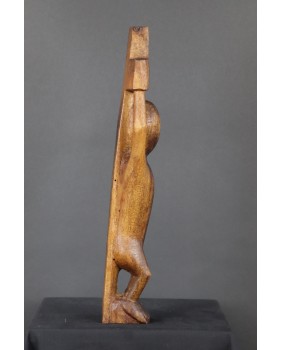
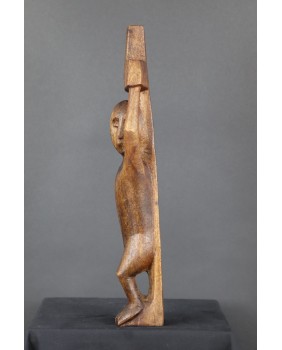
I decided to place the crucifix outside the category of tribal art due to its universal character, although I believe that the creator of the sculpture is someone who has been exposed to tribal art since childhood and grew up with it.
I searched for a long time for tribal art connotations in this sculpture. Only recently did I realize that this does not have to be the case. The defining feature of this sculpture is its naivety, not the canons of local rules.
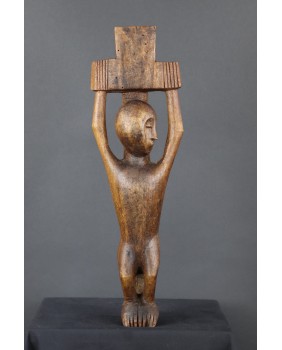
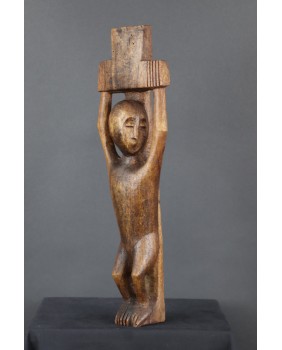
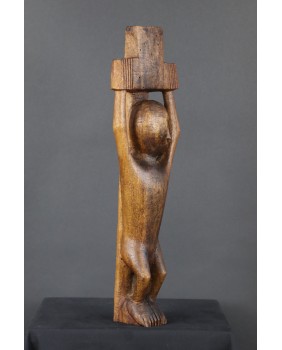
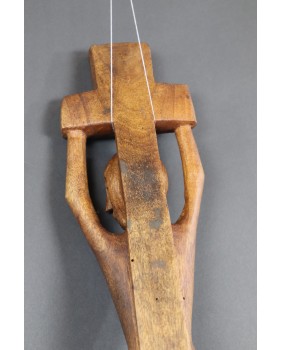
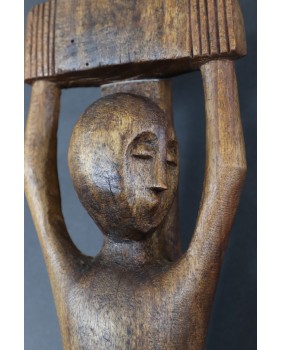
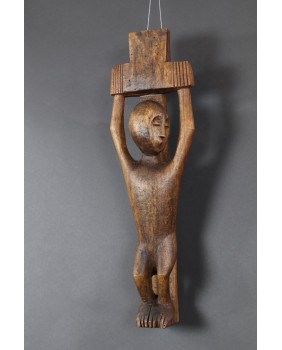
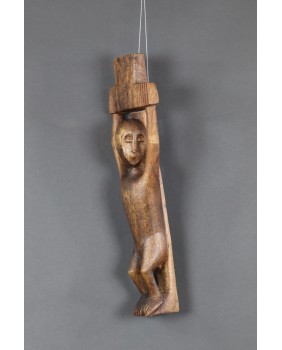
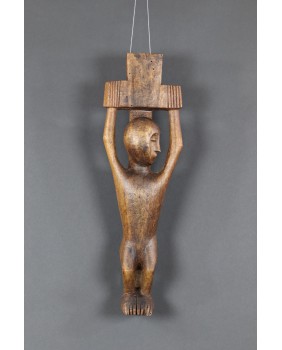
The creator of the crucifix was an excellent craftsman. He knew how to work with wood. The surfaces are smooth, almost polished. This differs from our European idea of naive art. We are used to the texture of a sculpture or at least its roughness. I think that the shape of Christ's face prompted me to search for the provenance of the cross in the context of African sculpture. Heart-shaped faces are present in some African masks, for example in the Punu community. In addition, it is a face devoid of emotion. Because Christ in this sculpture is dead. He fell asleep on the cross awaiting resurrection. Like in the fairy tales that missionaries told the indigenous people, converting them to the true faith.
I see a certain strangeness and stiffness in this sculpture, as if the artist's emotions were at odds with the subject matter. But I am looking at it through the eyes of a person raised in the Catholic faith, fed with an elaborate and multi-layered myth.
I decided to place the crucifix outside the category of tribal art because of its universal character, although I believe that the creator of the sculpture is someone who has been exposed to tribal art since childhood and grew up with it.
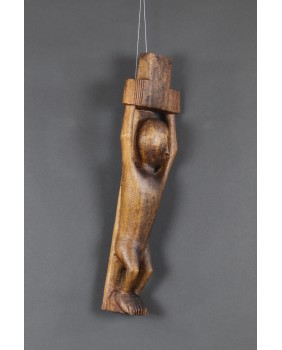
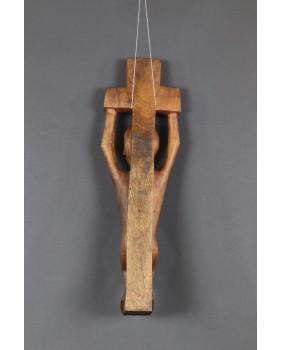
The crucifix is 44 cm high, 14 cm wide, and 7 cm deep.
I decided to place the crucifix outside the category of tribal art due to its universal character, although I believe that the creator of the sculpture is someone who has been exposed to tribal art since childhood and grew up with it.