


The headboard is also associated with the beliefs of many tribes that sleep and dream projections are the interference of ancestral spirits in life on earth. An appropriate headboard, in accordance with tribal canon, enables communication with ancestors. Headboards often take the form of totemic tribal sculptures to ensure the safety of such contact.
The first headrests appeared in Africa as early as ancient Egypt. They have survived to this day because they were made of stone. In Africa, the headrest serves many functions. It is, of course, a type of pillow that allows you to assume an ergonomic position while resting, but it also (and sometimes most importantly) protects the hairstyle, which for many tribes is a sign of status, prestige, and wealth. It often takes years to style the right hairstyle.
Many tribes also believe that sleep and dream projections are the interference of ancestral spirits in life on earth. A headboard that is appropriate and in accordance with tribal canon enables communication with ancestors. Headboards often take the form of totemic tribal sculptures to ensure the safety of such contact.
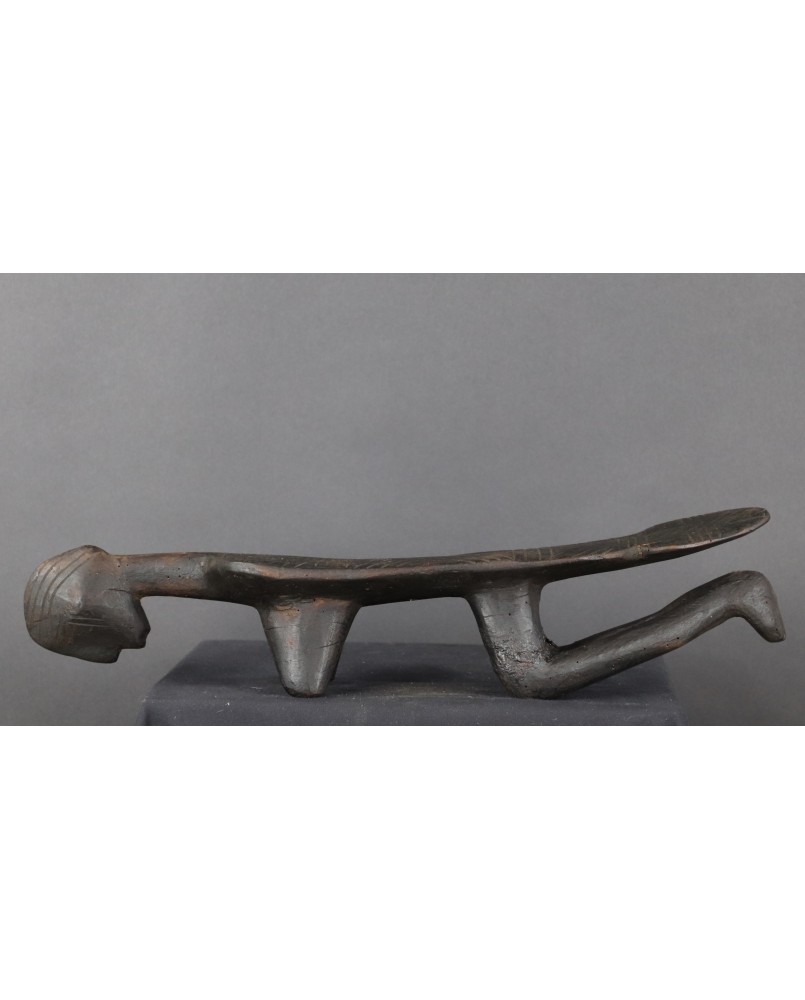
It is difficult to classify African headrests, especially since they sometimes have dual uses. During the day, they serve as stools. They are usually small and light, which is a remnant of the nomadic lifestyle of many tribes. There are headrests with geometric shapes, those with precise multi-level carvings, but also primitive ones, allowing you to see the natural branch used in their construction.
I have attributed the headrest I am offering to the Dogon. This is only because I have come across similar headrests on websites describing tribal art. On the other hand, there are also experts who claim that the Dogon did not make their own headrests. They claim that they took them over, like many other masks and sculptures, from the Tellem, an extinct people whose burials in caves on the Bandiagara Escarpment were explored in the second half of the 20th century. Based on the headrests found there, it was concluded that sacrifices were made on them to ensure peaceful sleep for the dead.
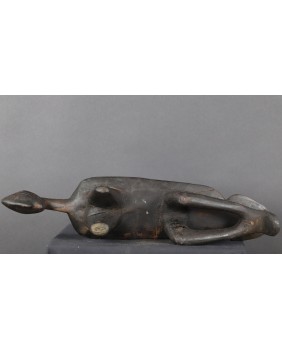
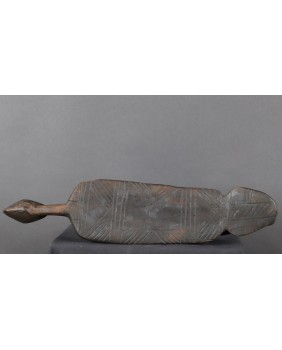
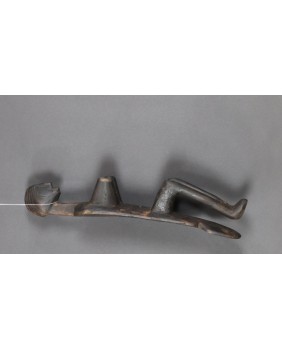
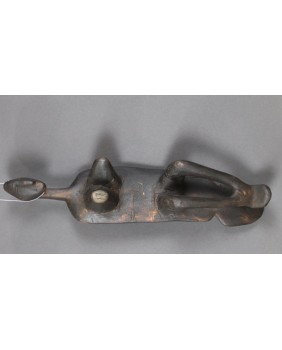
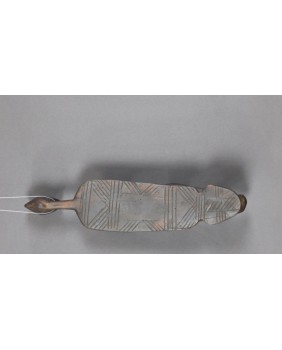
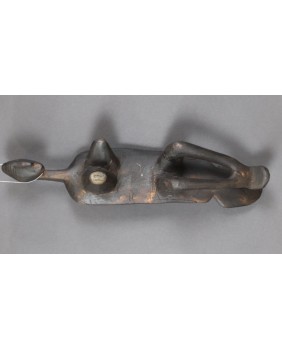
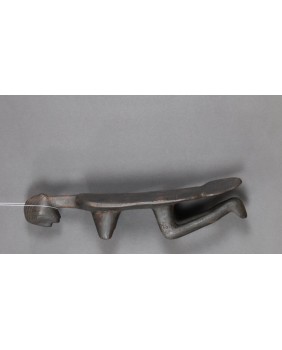
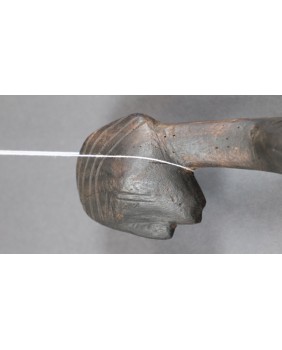
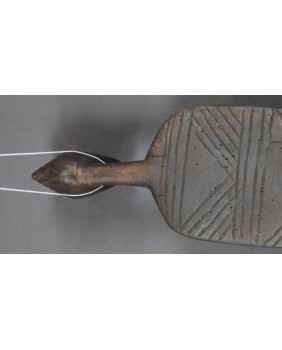
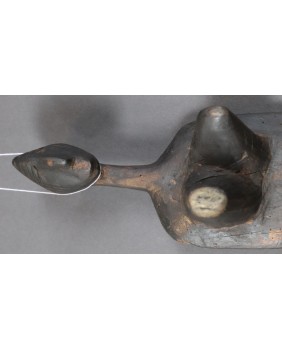
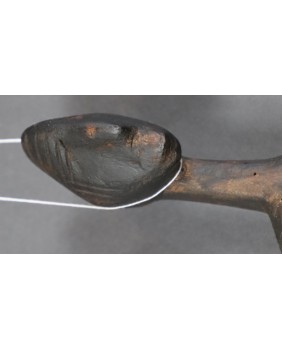
The headrest is quite primitive. It shows signs of a sloppy old repair and is made of light wood. It depicts a man, probably kneeling or bowing. I hope it was made in the first half of the 20th century. It is 44 cm long, 10 cm wide, and 8 cm high.
The headboard is also associated with the beliefs of many tribes that sleep and dream projections are the interference of ancestral spirits in life on earth. An appropriate headboard, in accordance with tribal canon, enables communication with ancestors. Headboards often take the form of totemic tribal sculptures to ensure the safety of such contact.