


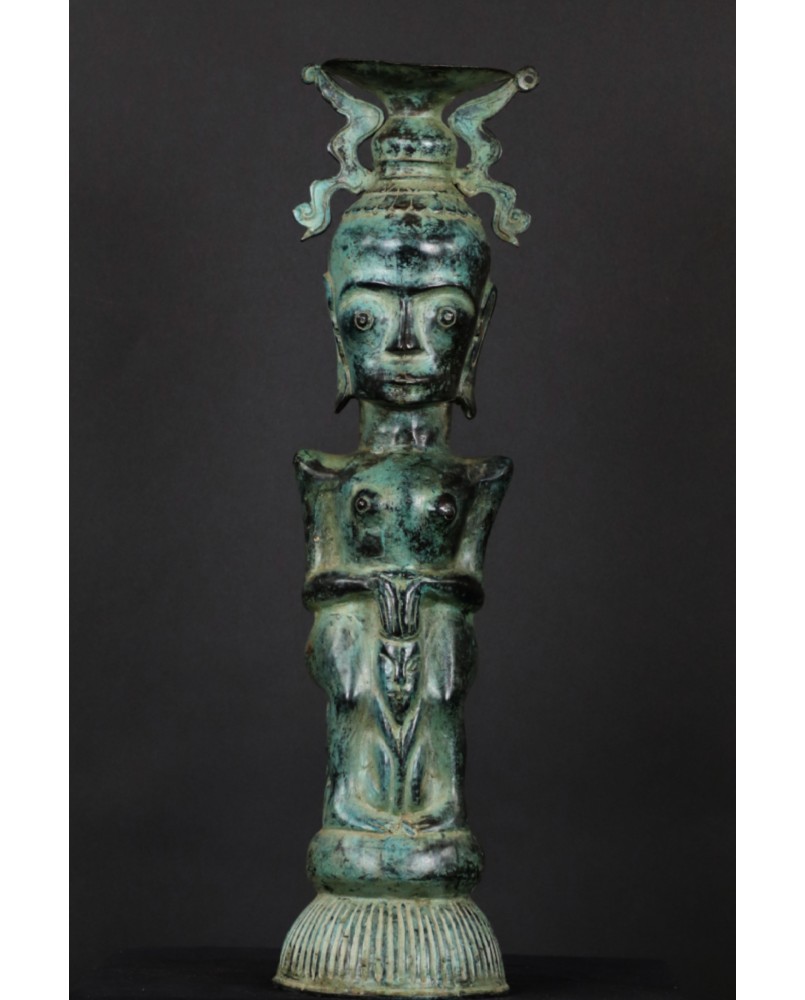
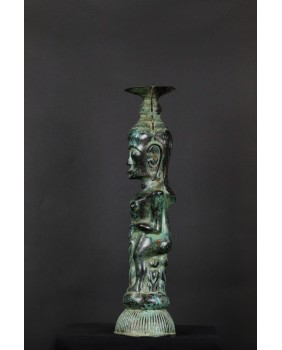
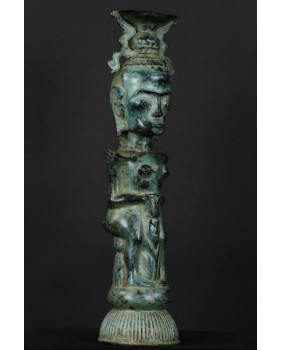
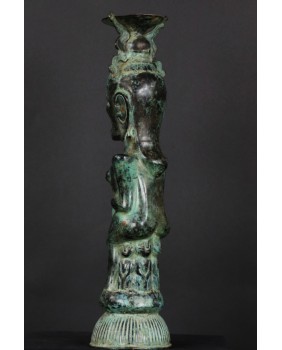
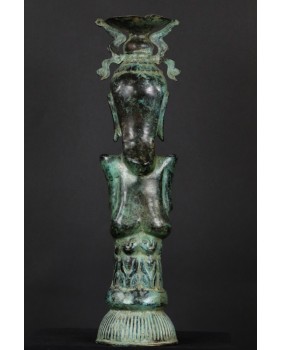
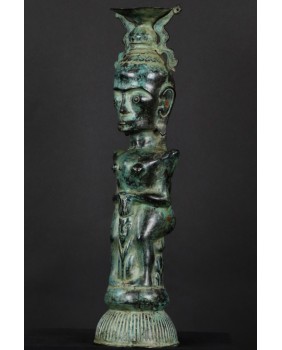
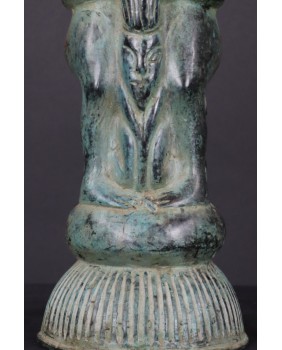
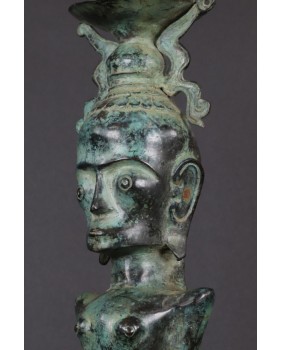
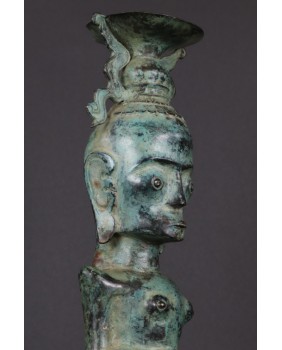
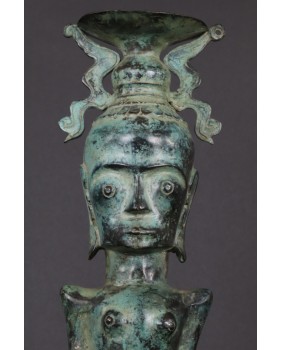
The figure probably represents an ancestor who is supposed to act as a guardian, a guard defending the protected area against evil forces. In this case, it is probably a household, and rather a wealthy one at that.
I believe that the sculpture I am selling is a 20th-century figure referring to the ancient tribal art of the Batak people. Perhaps it was made for religious rituals. For the convenience of users, it was made of bronze, although old sculptures were made from locally available materials, mainly wood, which unfortunately deteriorated quickly in those climatic conditions.
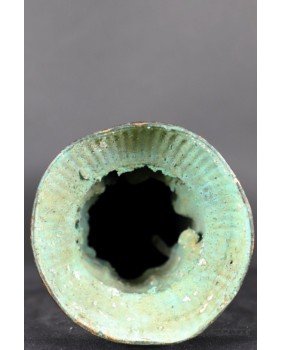
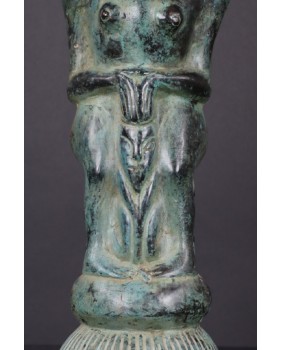
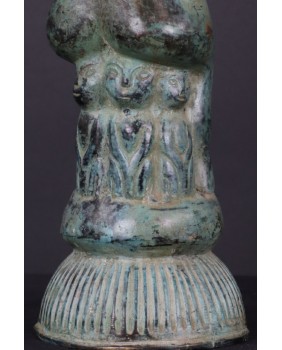
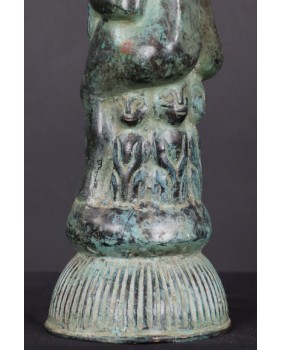
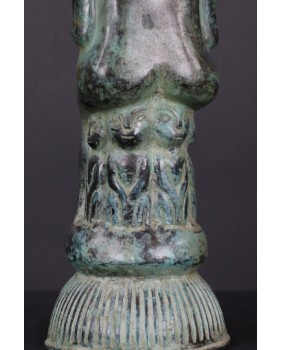
The figure probably represents an ancestor who is to act as a guardian, a guard defending the protected area from evil forces. In this case, it is probably a household, and rather a wealthy one at that. The figure ends with a small bowl for daily offerings. The figure sits on other small figures in a way that suggests that they have been defeated, dominated, and invalidated. They are probably a symbol of evil forces, most often those that bring disease, plague, and death.
I use the words "I think" and "probably" because it is important to realize that there are at least several hundred tribes and ethnic groups on the islands that make up Indonesia. The Batak people alone comprise six ethnic groups. At first glance, their art is stylistically similar, but it differs in details. These may be the shape of the eyes, ears, chin, headgear, or the way the figures are seated. These details define the art of specific ethnic groups. Unfortunately, this is expert knowledge that is unavailable to me, at least for now. This made me hesitate for a long time whether to attribute the sculpture to the Batak or the Dayak, especially since it is only a contemporary transposition of tribal art.
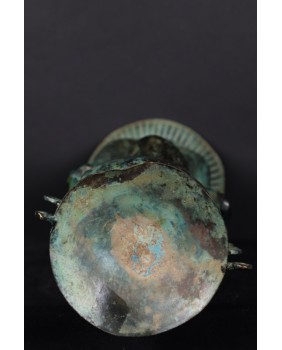
The sculpture is 46 cm high and 12 cm wide, with a diameter of 12 cm. The bronze is covered with a dark green artificially applied patina. It was probably created in the second half of the 20th century.
The figure probably represents an ancestor who is supposed to act as a guardian, a guard defending the protected area against evil forces. In this case, it is probably a household, and rather a wealthy one at that.