


The ceilings and some of the walls of these buildings were entirely covered with painted panels. I feel genuine admiration when looking at photographs of the interiors of these buildings. The more enthusiastic art critics compare their significance to that of Gothic cathedrals in Europe.
I must admit that for a moment I hesitated about where to place this panel in my store. Should it be among paintings or tribal art?
Aboriginal painting only began to reach a wider audience in the 1960s. At the beginning of the 21st century, many major institutions, such as the Metropolitan Museum in New York and the Tate Gallery in London, decided to hold permanent exhibitions of this art. Sometimes, invited artists painted on site, trying to capture the layout and atmosphere of old ceremonial houses. An interesting fact is that when Aboriginal artists came to one of the London galleries, they claimed that they had received special dispensation from the god Puti to use polymer paints. Art critics even began to move away from the traditional concept of "ethnic art" in favor of the concept of "customary art." . This would allow, at least in theory, for this art to respond to specific contemporary events and adapt tribal patterns to the realities of the 21st century.
This does not change the fact that this art grew out of the tradition of ceremonial houses. These were the most impressive buildings in the village, significantly larger than the residential huts. Important tribal ceremonies were held there. Only initiated men were allowed to enter them. The ceiling and some of the walls of these buildings were entirely covered with painted panels. I feel genuine admiration when I look at photographs of the interiors of these buildings. More exalted art critics compare their significance to that of Gothic cathedrals in Europe.
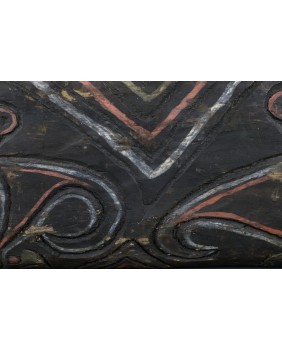
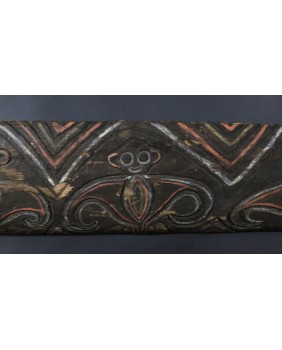
The paintings were created on the bark or growths of the sago palm. They were prepared by creating a relatively rectangular shape. They were covered with dark paint, on which the actual patterns were applied. Abstract or geometric forms, supernatural beings, the moon, the sun, stars, plants and animals, sometimes fantastical. Animals also served as totems and designated the clan's place in the ceremonial house. The number of patterns used by tribal artists is astonishing. It should also be noted that many patterns that are completely illegible to us have a specific meaning for those communities.
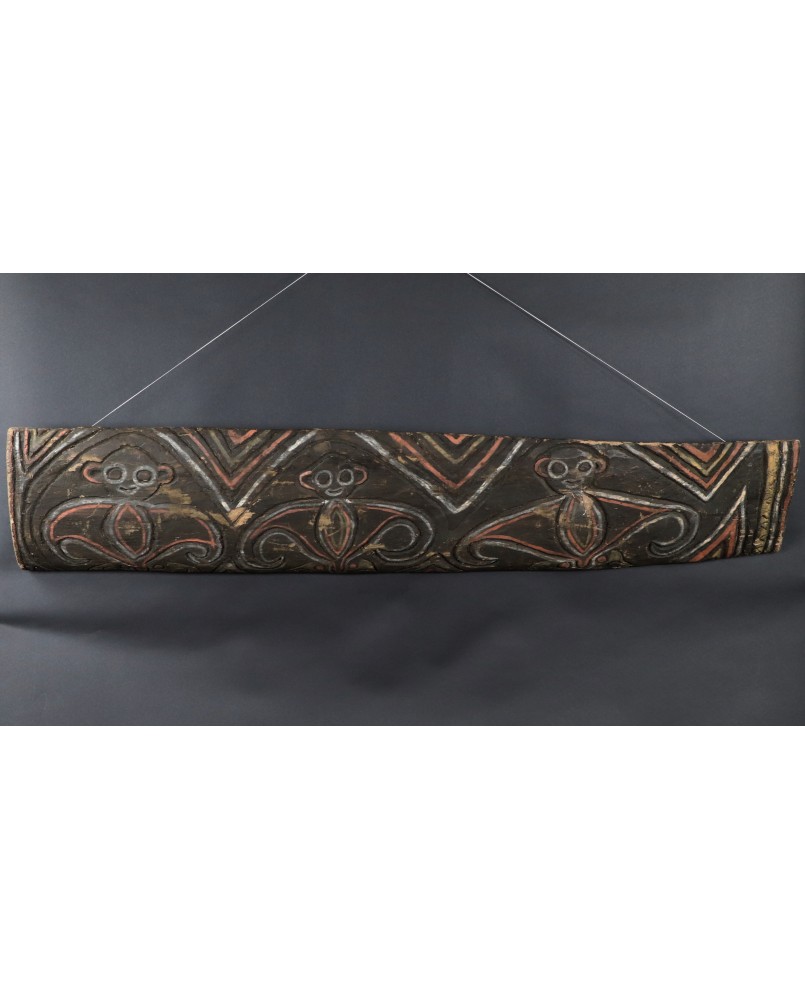
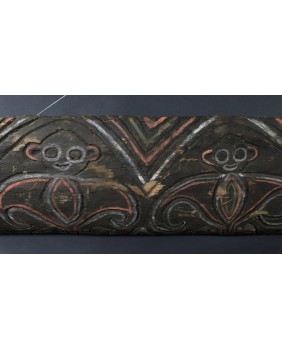
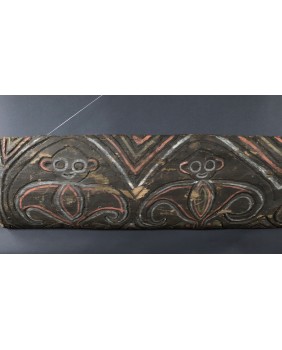
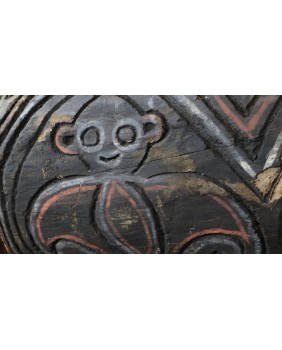
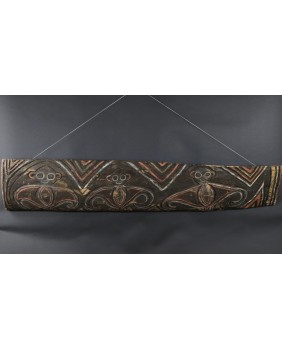
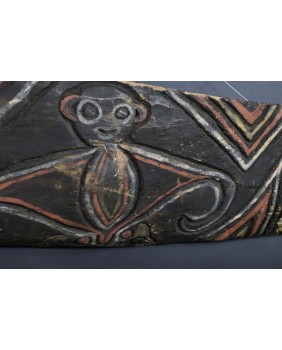
I cannot quite decide whether the panel I am offering is related to the ceremonial house or is a work of art by an artist who only draws inspiration from tradition. In my opinion, the painting depicts three monkeys, although a friend pointed out to me that they could also be bats, which are also present in the art of Papua New Guinea, as herbivorous bats were sometimes used as clan totems.
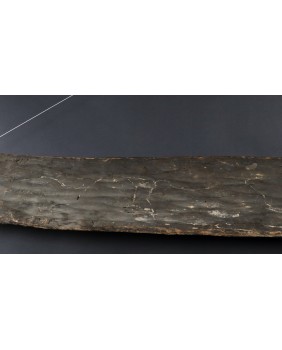
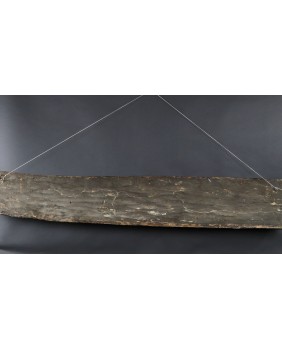
The panel is 125 cm wide and 25 cm high. The board on which it was made is slightly convex and about 3 cm thick. Despite traces of wood-eating insects, it is in relatively good condition.
The ceilings and some of the walls of these buildings were entirely covered with painted panels. I feel genuine admiration when looking at photographs of the interiors of these buildings. The more enthusiastic art critics compare their significance to that of Gothic cathedrals in Europe.