


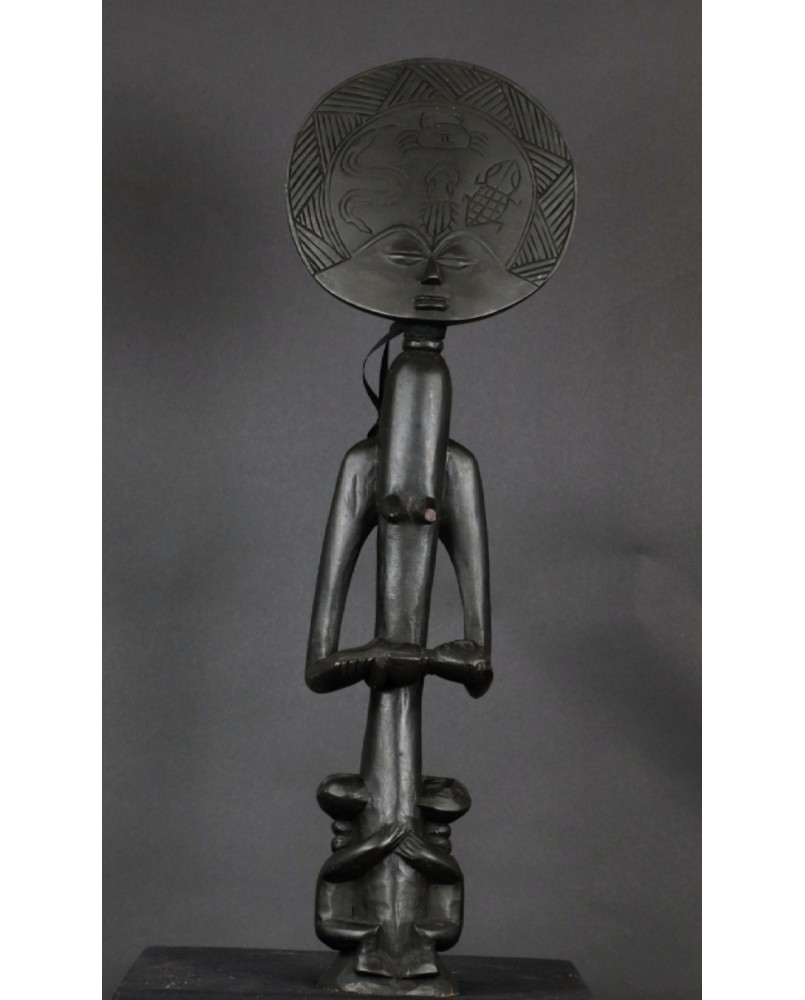
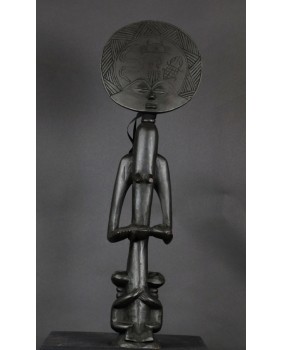
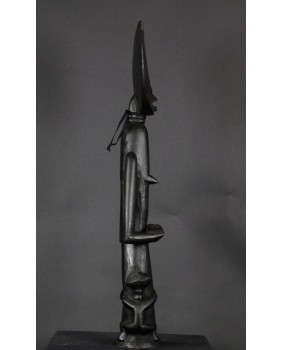
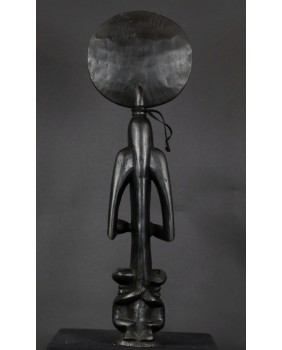
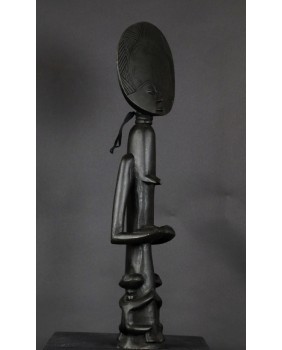
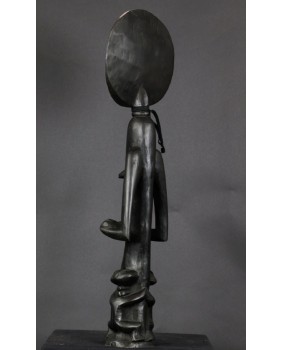
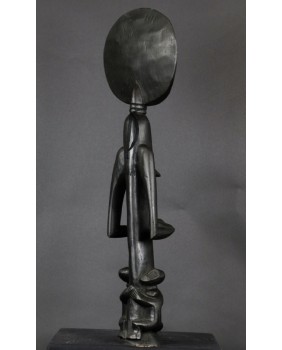
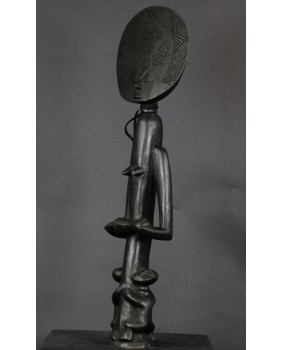
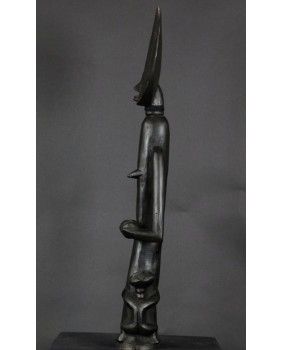
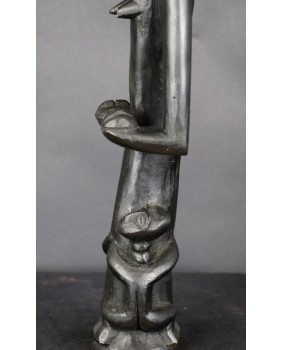
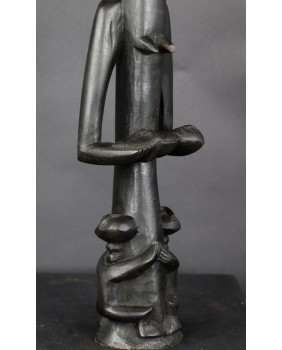
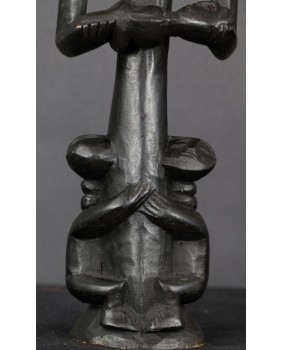
The sculpture has changed significantly over the years. Initially, it was almost a stick with a large head, but now it is an almost fully three-dimensional sculpture of a woman surrounded by her offspring. The only thing that remains unchanged in the sculpture is the large, round head symbolizing the moon, which is the embodiment of the goddess responsible for fertility.
The Akuaba figurine is one of the most recognizable tribal sculptures from Africa. It is a type of doll, a talisman intended for young women. It is supposed to ensure fertility, protect pregnancy, and lead to a happy delivery. It is a symbol of happy motherhood. In the past, it was worn every day by young women and after childbirth it was placed in a home altar or passed on to another young woman.
The sculpture has been reproduced in thousands of copies, which has become a pretext for discussion about the boundaries of tribal art. It is well known that orthodox collectors consider only those objects to be tribal art that were made with the intention of being used in tribal rituals and were actually used in such ceremonies. Less radical collectors accept old objects that adhere to the canon of tribal art.
The talisman I am selling stems from tribal tradition. Its users believe that it is helpful, that it helps to give birth to a healthy child. It is a bit like, for example, some Catholics believing that a figurine of St. Anthony helps to find a lost object. Of course, today talismans are made with the intention of selling them. However, the maker cannot know whether the buyer will be a tourist or a young woman from Ghana. If the same Akuaba is bought by an Ashanti woman, it is tribal art, but if the buyer is a tourist, it is not?
The sculpture has changed a lot over the years. Initially, it was almost a stick with a large head, but now it is an almost fully three-dimensional sculpture of a woman surrounded by her offspring. The only thing that remains unchanged in the sculpture is the large, round head, a symbol of the moon, which is the embodiment of the goddess responsible for fertility.
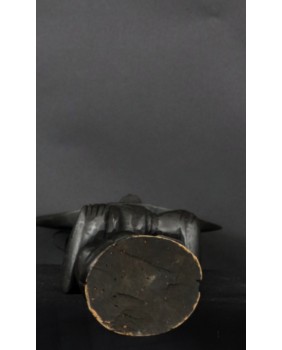
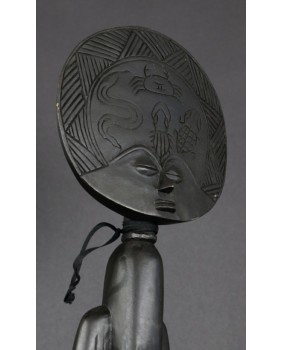
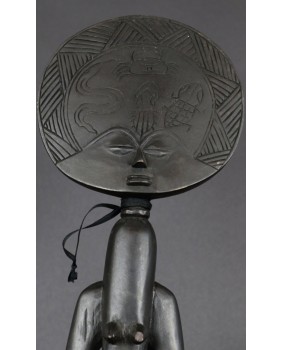
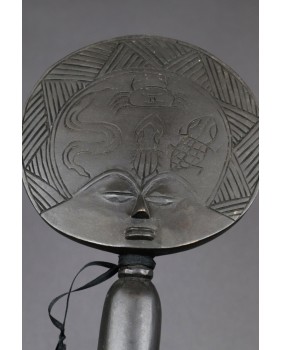
The sculpture is not old. I think it was created in the second half of the 20th century. It is in good condition. It stands out from other talismans of this type with additional symbols on the face. It is 60 cm high, 20 cm wide, and 7 cm deep.
The sculpture has changed significantly over the years. Initially, it was almost a stick with a large head, but now it is an almost fully three-dimensional sculpture of a woman surrounded by her offspring. The only thing that remains unchanged in the sculpture is the large, round head symbolizing the moon, which is the embodiment of the goddess responsible for fertility.