


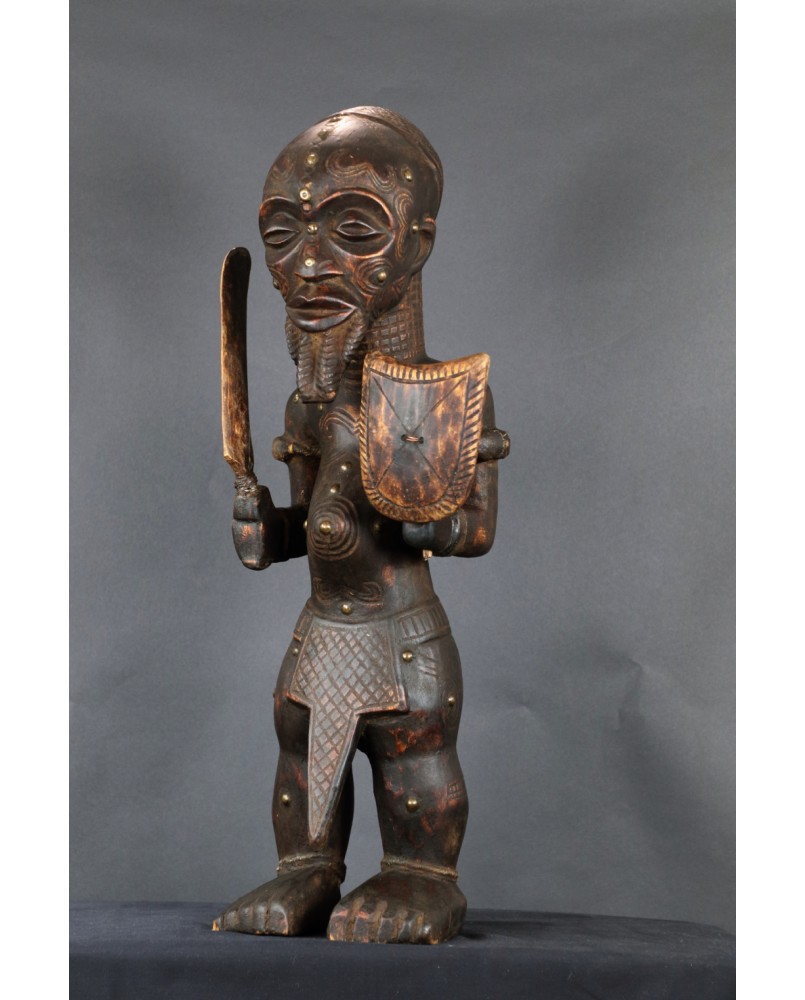
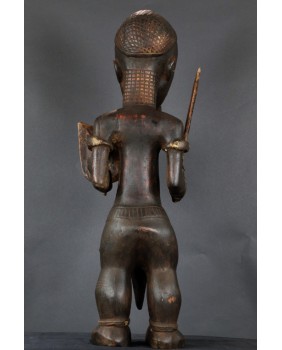
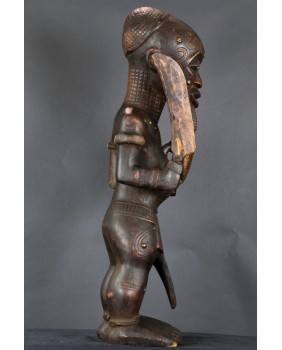
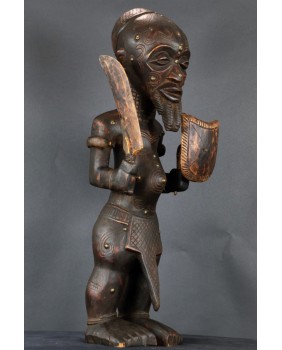
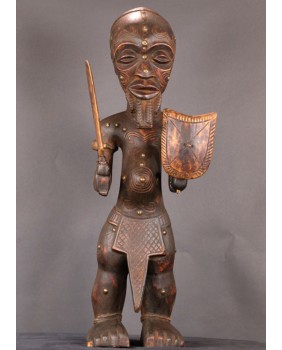
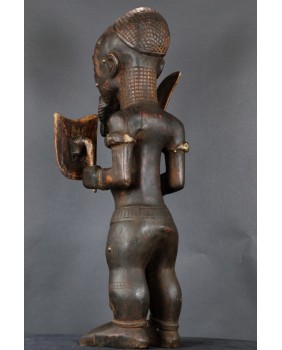
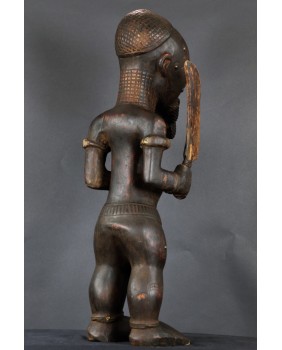
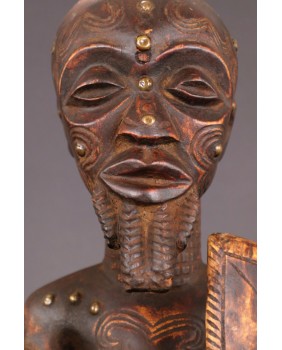
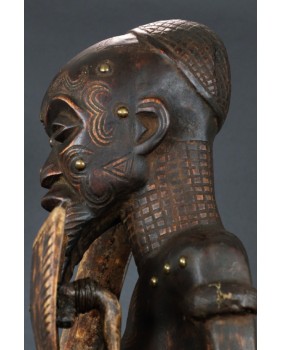
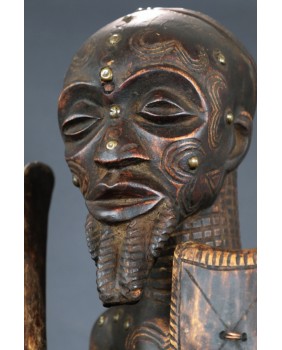
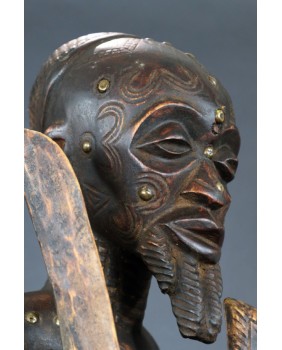
According to Luluwa beliefs, the figure of the chief is inhabited by the spirits of ancestors. It protects the village and individual households. It enhances the authority of the ruling chief, who is responsible for the continuity of tribal traditions and connection with the beliefs of previous generations.
The Luluwa tribe, sometimes also called Lulala, Lula, or Bena Lula, is a small community living in southern Congo. They formed caste-based organizations around local leaders, but in times of crisis or danger, they were able to unite under a jointly elected chief.
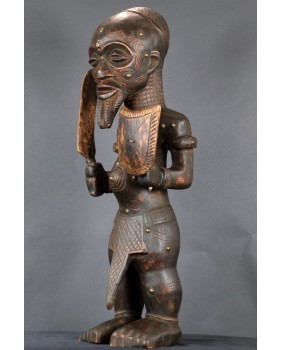
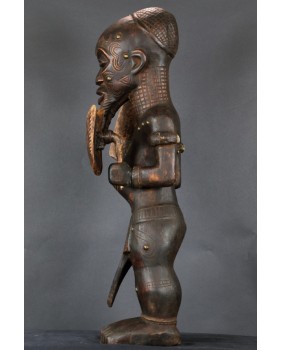
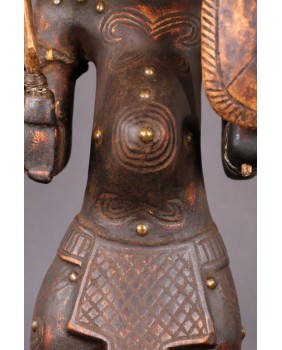
In terms of tribal art, they created few masks, but they are better known for their characteristic figures with disproportionately large heads, convex pointed navels (the seat of all human concerns) and scarifications all over the body, which in real life indicated their place in the social hierarchy. Figures depicting women dominate. This is related to a very elaborate fertility cult. Almost as numerous are sculptures embodying the local chief, and it is such a sculpture that I propose.
According to Luluwa beliefs, the figure of the chief is inhabited by the spirits of ancestors. It protects the village and individual households. It raises the authority of the ruling chief, who is responsible for the continuity of tribal traditions and connection with the beliefs of previous generations.
The Luluwa also made figures to protect against thieves, to help with hunting (such figures were taken along to witness the hunt), and containers for hemp. At the end of the 19th century, their then chief, Kalamba Mukwenge, probably under the influence of Islam, tried to break with the traditional customs of the tribe. He forbade the drinking of palm wine and the smoking of hemp, and restricted tribal ceremonies. Most remained faithful to the old customs, sometimes in secret.
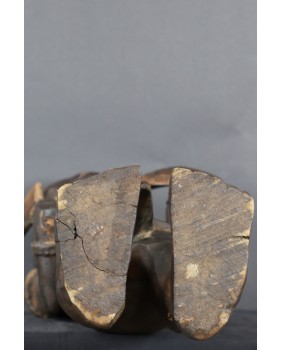
I hope the figure is old, I would guess the first half of the 19th century. At least that is what can be inferred from the beautiful patina and the number of repairs made. Some were done professionally, others look like makeshift fixes (the sword is held on a promise of honor) that have survived the years.
The sculpture is quite large. It is 70 cm high, 26 cm wide, and 18 cm deep. The armbands are probably made of snakeskin.
According to Luluwa beliefs, the figure of the chief is inhabited by the spirits of ancestors. It protects the village and individual households. It enhances the authority of the ruling chief, who is responsible for the continuity of tribal traditions and connection with the beliefs of previous generations.