


And although, like steampunk, it uses elements of existing material reality, it is closer to constructivism or futurism, which assume a connection between man and machine, rejecting the relics of the past, rejecting decorativeness, and subordinating art to human needs.
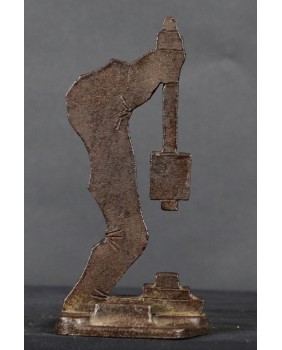
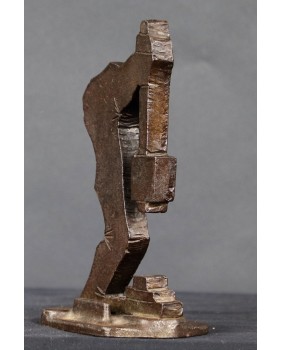
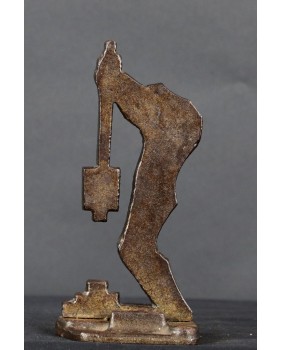
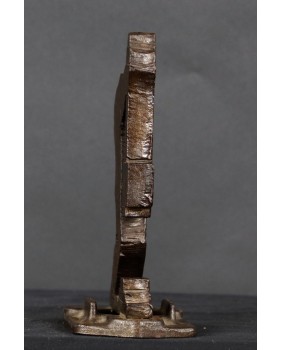
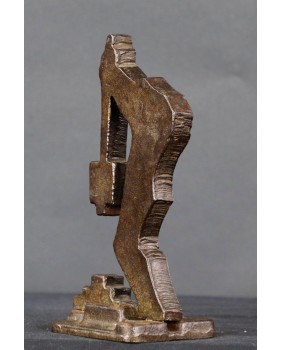
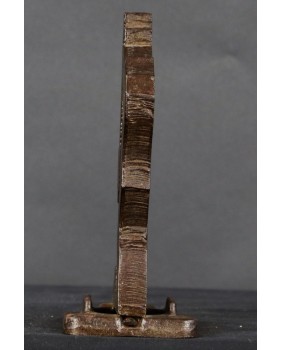
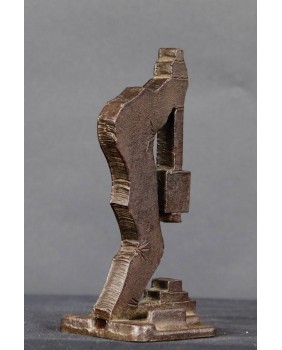
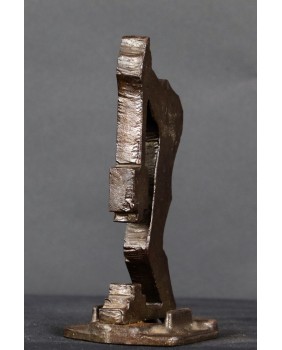
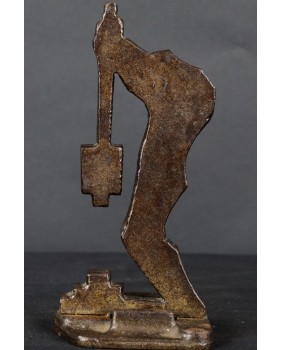
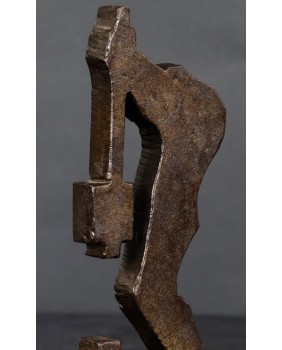
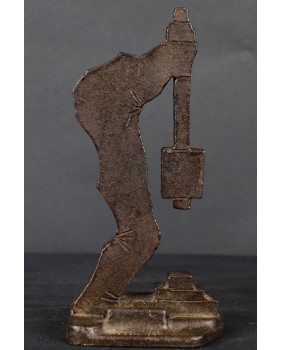
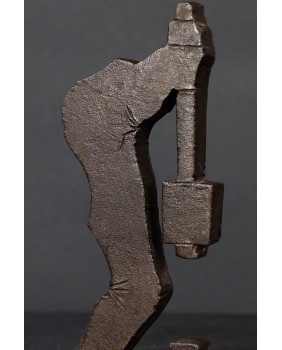
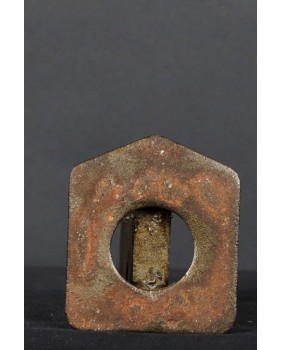
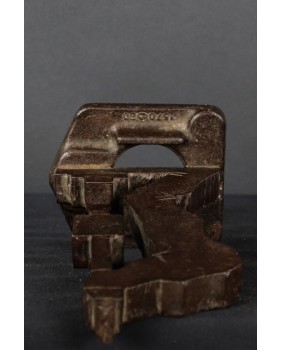
When I bought this sculpture, which the French seller had titled "Hammer Man," I thought that "Hammer Man" might be a precursor to the now popular art movement known as steampunk. It was only later that I realized that steampunk grew out of Victorian art, which was decorative, even sugary, I would say. This sculpture is raw, austere, simple. And although, like steampunk, it uses elements of existing material reality, it is closer to constructivism or futurism, which assume a connection between man and machine, rejecting the relics of the past, rejecting decorativeness, subordinating art to human needs. Of course, assuming that the sculpture is the creation of an artist who is aware of his goals. Unfortunately, no one bothered to sign the sculpture.
This is another of my unfulfilled hopes, that the sculpture will be attributed to a specific artist.
It is not a large sculpture. It is 22 cm high, 10 cm wide, and 6 cm deep. The patina suggests that it was created at the beginning or at the latest in the first half of the 20th century.
And although, like steampunk, it uses elements of existing material reality, it is closer to constructivism or futurism, which assume a connection between man and machine, rejecting the relics of the past, rejecting decorativeness, and subordinating art to human needs.