


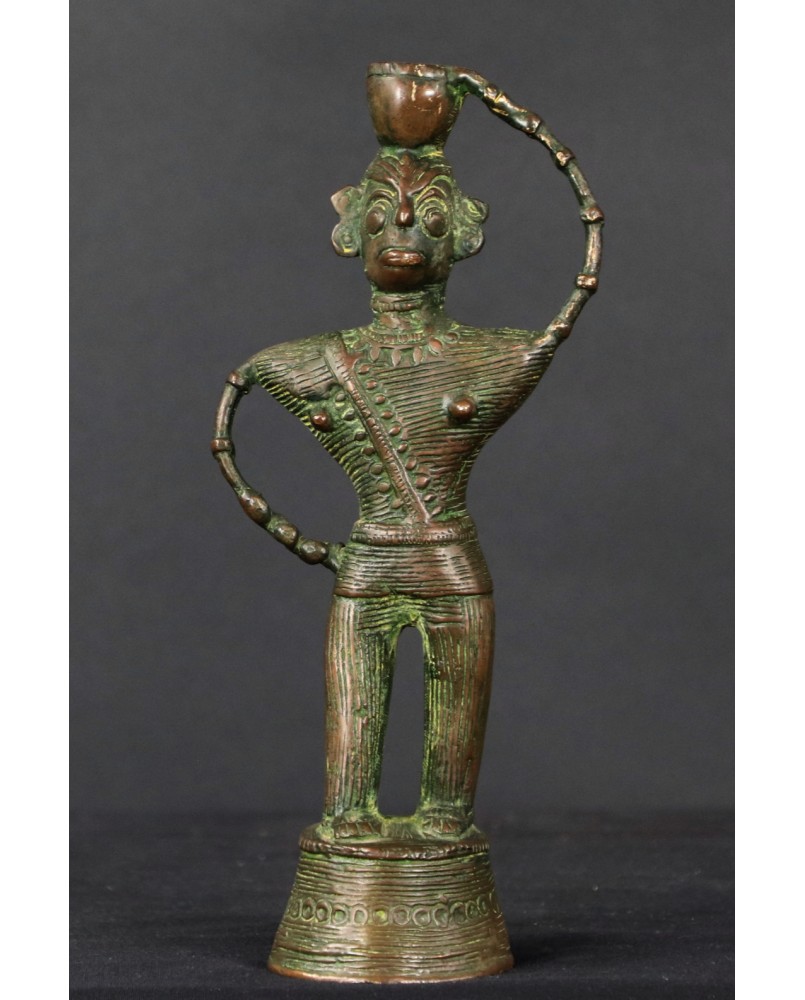
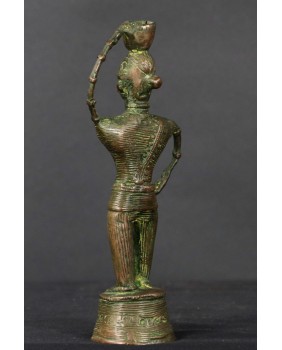
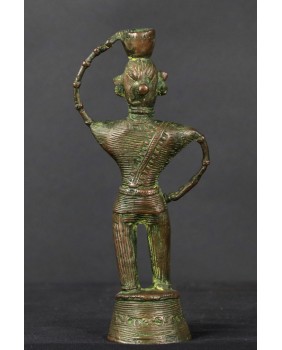
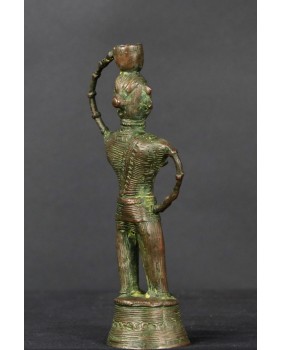
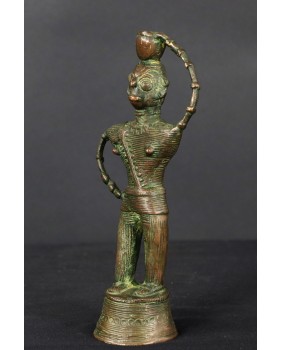
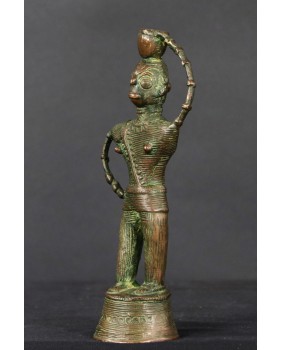
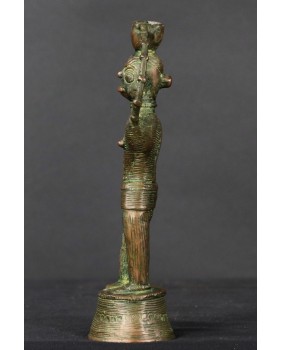
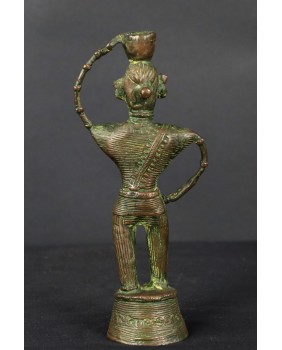
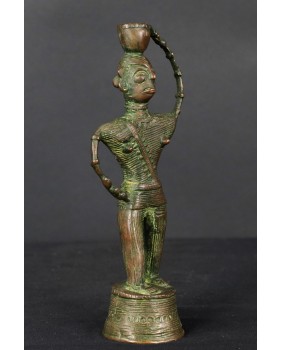
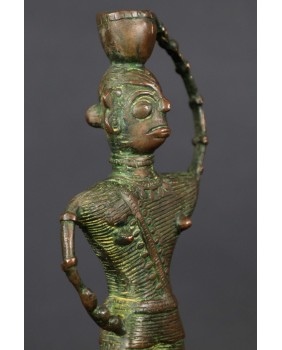
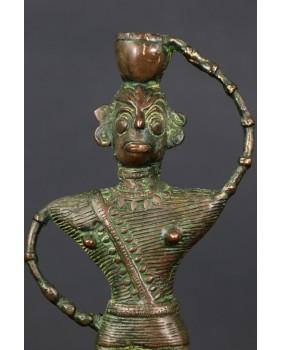
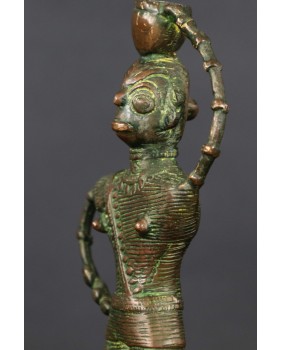
What captivated me about this sculpture was what many would consider a flaw. Its primitivism, particularly evident in the way the face and hands were crafted. This adds authenticity to the sculpture. The artist-craftsman made the figure just as his ancestor did two thousand years ago.
I have already written about the art of lost wax bronze casting in the Dohra region of Bastar province in southern India. It is a skill that has been passed down from generation to generation in hundreds of small craft workshops for several thousand years. The items produced there are not always ritual or religious in nature. They also include figurines of people and animals, candlesticks, lamps, jewelry, talismans, and even entire scenes from everyday life. Of course, today most of them are produced with tourists in mind, who want to take a piece of Indian exoticism home with them.
The figurine I am selling depicts a woman carrying water in a traditional Indian tomba vessel. Despite this ordinary everyday activity, she is dressed in festive attire and wearing jewelry. Somewhere I came across a similar sculpture described as a goddess of fertility, but I am skeptical about this idea.
What captivated me in this sculpture was what many would consider a flaw. Its primitiveness, particularly evident in the way the face and hands are rendered. This adds authenticity to the sculpture. The artisan artist made the figure just as his ancestor did two thousand years ago.
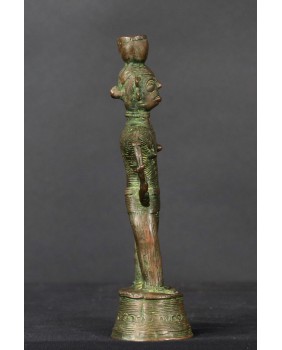
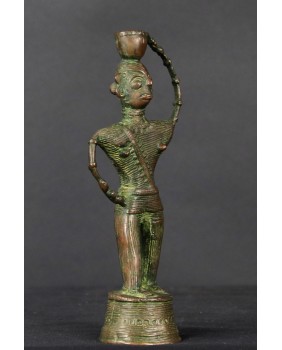
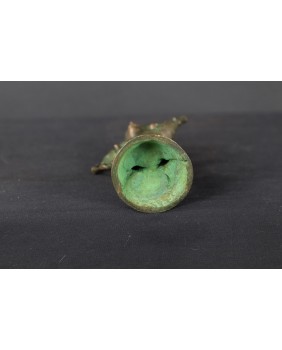
The sculpture is small, 21 cm high, 10 cm wide, and 6 cm deep. It was created in the second half of the 20th century, closer to the end.
What captivated me about this sculpture was what many would consider a flaw. Its primitivism, particularly evident in the way the face and hands were crafted. This adds authenticity to the sculpture. The artist-craftsman made the figure just as his ancestor did two thousand years ago.